

You’re looking at your driveway and seeing what happens when the base wasn’t prepared right. Maybe water pools near the garage after every storm. Maybe you’ve got uneven settling where the clay soil expanded and contracted one too many times. Maybe you’re tired of patching the same cracks every year.
Here’s what changes when the installation is done right from the start. Your driveway slopes properly—minimum quarter-inch per foot, sometimes more depending on your property’s grade and soil conditions. Water moves away from your foundation instead of sitting there soaking into the clay underneath. The base is deep enough and compacted correctly to handle vehicle weight without shifting.
You’re not calling someone back in three years because the whole thing needs to be redone. You’re not dealing with erosion eating away at the edges. You’ve got a driveway that does its job for the next 20+ years without constant maintenance eating into your budget.
We’re a family-owned company based in Monroe, serving Allens Crossroads and the surrounding areas. We handle residential and commercial hardscape projects—driveways, patios, retaining walls, walkways—with the kind of attention that comes from knowing we’ll see you around town.
We’re not the biggest operation in Charlotte, and that’s intentional. You get the same crew from consultation to cleanup. You get someone who answers the phone when you call. You get a team that understands how clay soil behaves in this part of North Carolina and what it takes to build something that lasts.
We handle permits, work with inspectors, and keep you updated through every phase. No disappearing for weeks. No surprise change orders. Just clear communication and work that holds up.

We start with a free consultation at your property. We’ll look at your existing driveway or the area where you want one installed, check the grade and drainage patterns, and talk through what you’re dealing with. If there are clay soil issues or drainage problems, we’ll point them out and explain what needs to happen to fix them.
Once you approve the plan, we handle the permits and schedule the work. Demo and excavation come first—we remove the old surface if there is one and dig down to the depth your driveway needs. For standard vehicle loads, that’s usually 12 to 14 inches total depth. We install drainage solutions like French drains if your property needs them, especially in areas where clay soil holds water.
Next is base prep. We bring in the right aggregate material, spread it in layers, and compact each layer properly. This is where most driveway failures start—if the base isn’t stable, nothing on top of it will be either. After the base is solid, we install your chosen surface: concrete, pavers, or asphalt. Each material has different installation requirements, and we follow them exactly.
Final grading, cleanup, and a walkthrough with you to make sure everything meets expectations. You’ll know how to maintain it and what to watch for over the years.

Ready to get started?
You’re getting a driveway designed specifically for the conditions on your property. That means proper depth—not the minimum, but what your soil and vehicle load actually require. It means drainage that accounts for how water moves across your lot during heavy summer storms, which Allens Crossroads gets plenty of.
We use materials rated for North Carolina’s freeze-thaw cycles and humidity. Concrete, pavers, and asphalt all behave differently in this climate, and we’ll walk you through which option makes sense for your budget and how you use the space. If you’re going with pavers, you’re looking at concrete pavers or natural stone that won’t shift or sink when installed over a properly prepared base.
You’re also getting someone who handles the permitting process and knows what local building codes require. Union County has specific requirements for driveway width, setbacks, and drainage. We make sure your project passes inspection the first time so you’re not dealing with delays or rework.
The clay-heavy soil common in this area expands when it gets wet and contracts when it dries out. If your driveway base isn’t built to handle that movement, you’ll see cracking and settling within a few years. We account for that from the start with proper excavation depth, the right base materials, and compaction that actually holds.
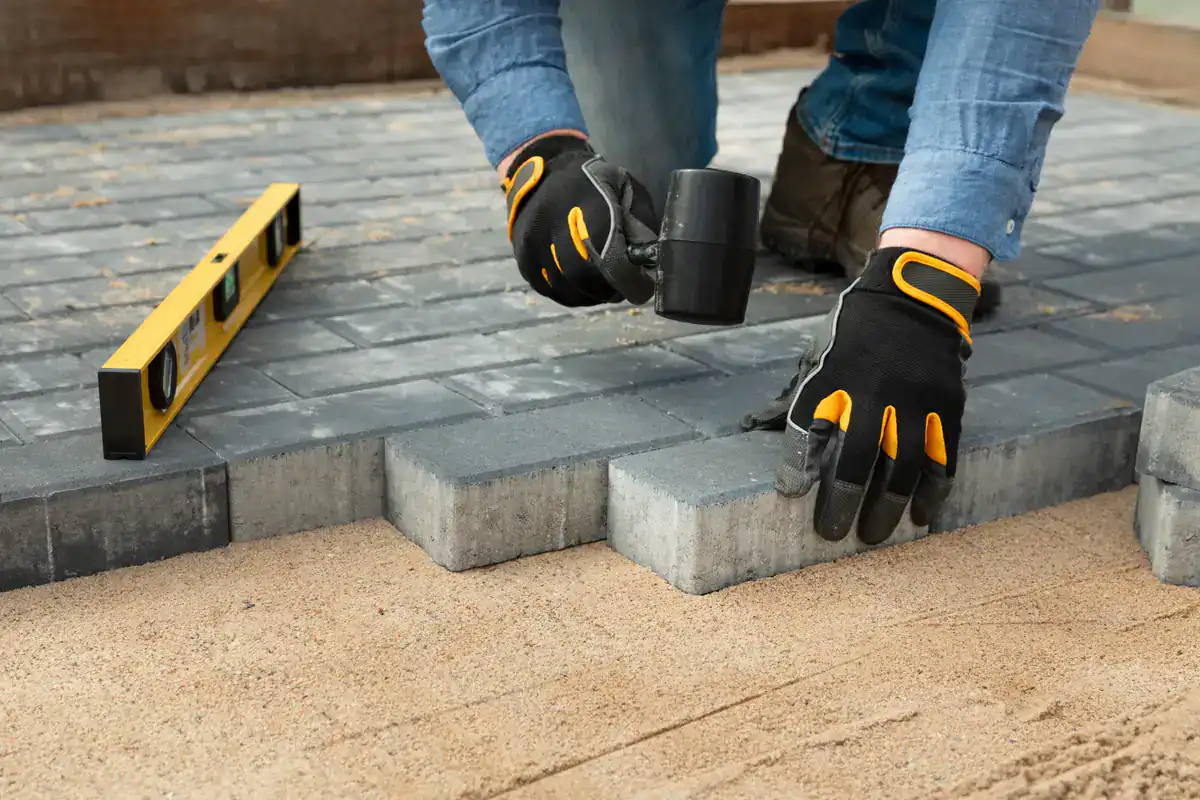
Most residential driveway installations take between three and seven days depending on size, material choice, and site conditions. Demo and excavation usually take a day. Base prep and compaction take another one to two days—you can’t rush compaction if you want a stable base.
Concrete driveways need time to cure before you can drive on them, usually seven days for light vehicles and longer for heavier trucks. Asphalt paving in Allens Crossroads, NC can typically handle light traffic within a day or two, but full curing takes several weeks. Paver installations can be used immediately once the final layer is compacted and the pavers are set.
Weather affects the timeline, especially for concrete and asphalt work. We don’t pour concrete if rain is forecast within 24 hours, and asphalt needs warm temperatures to install properly. If your project requires permits or inspections, add a few extra days to the schedule for those steps.
Asphalt is usually the most budget-friendly option upfront. Concrete costs more initially but lasts longer with less maintenance. Pavers are the most expensive to install but give you the most design flexibility and are easier to repair if you ever need to access utilities underneath.
In Union County, concrete typically costs 30% to 50% less than pavers for similar square footage. Asphalt falls somewhere between the two but requires seal coating every few years to maintain it, which adds to long-term costs. If you’re planning to stay in your home long-term, concrete or pavers usually make more financial sense.
The real cost driver isn’t just the surface material—it’s the site prep. If your property has drainage issues or clay soil that needs extra base depth, that affects the total price regardless of which surface you choose. We’ll give you an accurate estimate after looking at your specific property conditions during the consultation.
Yes, most driveway projects in Union County require a permit, especially if you’re adding a new driveway or significantly changing the footprint of an existing one. The permit process ensures your driveway meets setback requirements, doesn’t create drainage problems for neighboring properties, and follows local building codes.
We handle the permit application and coordinate with inspectors so you don’t have to navigate that process yourself. The county will want to see site plans showing where the driveway will be located, how wide it is, and how drainage will be managed. If your property connects to a state-maintained road, there may be additional requirements from NCDOT.
Permit costs are usually a few hundred dollars and processing takes one to two weeks depending on the county’s workload. Skipping the permit might seem like it saves time and money, but if the county finds out, you could be required to remove the work and start over—which costs a lot more than just doing it right the first time.
Clay soil is common throughout this part of North Carolina, and it’s terrible for drainage because it holds water instead of letting it pass through. When clay gets saturated, it expands. When it dries out, it contracts. That constant movement will crack and shift any driveway that isn’t built to handle it.
We address this with deeper excavation and better base materials than you’d need in areas with sandy or loamy soil. The base needs to be thicker and made from crushed stone that drains well and doesn’t shift when the clay underneath moves. We also install French drains or other drainage systems if your property has areas where water naturally collects.
Proper grading is critical. Your driveway needs to slope away from structures at the right angle—usually at least a quarter inch per foot, sometimes more depending on how flat your lot is and where the water needs to go. If water can’t drain off the surface quickly, it’ll soak down into that clay base and cause problems. We make sure water has a clear path off your property before we ever pour or pave anything.
All three main options—concrete, asphalt, and pavers—can work well here if they’re installed correctly. Concrete handles freeze-thaw cycles better than asphalt and doesn’t need regular seal coating. It’ll last 30 to 40 years with minimal maintenance if the base is solid and it’s sealed every few years to prevent moisture intrusion.
Asphalt is more flexible, which helps it handle ground movement from clay soil, but it softens in extreme heat and needs seal coating every two to three years. It typically lasts 15 to 20 years before needing resurfacing. If you’re on a tighter budget and okay with more frequent maintenance, asphalt can be a good choice.
Pavers give you the most durability and design options. Individual pavers can be replaced if one cracks, and they handle ground movement better than solid concrete slabs. They’re the most expensive upfront but require almost no maintenance beyond occasional cleaning and re-sanding the joints. For North Carolina’s humidity and temperature swings, pavers hold up extremely well as long as the base underneath is properly compacted.
That depends entirely on what material you choose. Paver driveways can handle vehicle traffic as soon as the installation is complete—same day in most cases. The pavers are set into sand or gravel base that’s already compacted, so there’s no curing time needed.
Concrete driveways need at least seven days before you park a car on them, and ideally 28 days to reach full strength before heavy vehicles like trucks or RVs use them. Driving on concrete too early can cause surface damage and cracking that shortens the lifespan of your driveway. We’ll mark off the area and give you clear guidance on when it’s safe to use.
Asphalt can typically handle light traffic within 24 to 48 hours after paving installation in Allens Crossroads, NC, but it continues to cure and harden for several weeks. Avoid parking in the same spot repeatedly during that time, and don’t turn your steering wheel while the vehicle is stationary—that can leave marks in the surface while it’s still soft.
Other Services we provide in Allens Crossroads