

You pull up to a driveway that looks sharp and drains perfectly. No puddles after a storm. No cracks spreading across the surface six months later. No sections sinking or heaving because someone skipped the base work.
That’s what happens when you account for Charlotte’s clay soil from day one. The soil here expands when wet and contracts when dry, which is why you see so many driveways with problems. If the base isn’t compacted properly and the drainage isn’t engineered to move water away fast, you’re just counting down to failure.
A proper driveway installation in NoDa means you’re not dealing with expensive repairs in two years. You’re not watching water pool near your foundation. You’re not embarrassed every time someone pulls up. You’ve got a clean, functional surface that handles everything Charlotte’s weather throws at it.
Union Landscaping and Hardscape S Corp is a family-owned company that’s been working in the Charlotte area for over 20 years. We’re not a national franchise or a crew that showed up last month. We know this soil, this climate, and what works in neighborhoods like NoDa.
NoDa’s a unique spot. You’ve got historic homes mixed with new construction, creative professionals who care about aesthetics, and property values that demand quality work. We’ve built driveways for homeowners who work from home and need projects done without chaos, and for families who want something that fits the artistic, eclectic vibe of the neighborhood.
We’re licensed general contractors in North Carolina, fully insured, and we back our hardscape work with a five-year warranty. That’s not something you hear from every paving contractor.

First, we assess your property’s drainage and soil conditions. Charlotte’s clay soil requires specific base preparation, and your property’s slope determines how we engineer water flow. We’re looking at where water goes during heavy rain and how to keep it away from your foundation.
Next, we excavate to the proper depth and compact the subgrade. This step gets skipped or rushed more than any other, and it’s why driveways fail. We’re building a stable foundation that won’t shift when the clay expands and contracts. Then we install the base material in layers, compacting each one to prevent future settling.
For concrete driveways, we set forms, install rebar or wire mesh for reinforcement, and pour at the right thickness for your vehicle load. For paver installations, we add a sand layer, set high-quality pavers in your chosen pattern, and ensure proper edge restraint. Every installation includes a minimum slope of 1 inch per 8 feet for drainage.
Finally, we clean up completely and walk you through maintenance basics. You’ll know exactly what to expect and how to keep your driveway looking good for years.

Ready to get started?
You’re getting a complete installation, not just surface work. That means proper excavation, engineered base preparation, drainage solutions specific to your property, and materials that match NoDa’s aesthetic. We handle permits, coordinate timing around your schedule, and keep the job site clean.
For concrete driveway installations in NoDa, you’re looking at reinforced concrete poured at the right thickness, with control joints placed to manage cracking, and a finish that provides traction without being rough. For paver driveways, you’re getting interlocking pavers that handle freeze-thaw cycles better than solid concrete, with options for permeable systems if drainage is a priority.
NoDa homeowners often choose pavers for the design flexibility. You can match your home’s character with colors and patterns that feel custom, not cookie-cutter. Permeable pavers are becoming more popular here because they manage stormwater runoff better than traditional surfaces, which matters during Charlotte’s intense summer thunderstorms.
We source materials locally when possible, and we only use products we’d install at our own homes. You’re not getting the cheapest option that’ll need replacement in five years. You’re getting materials chosen for durability in this specific climate.
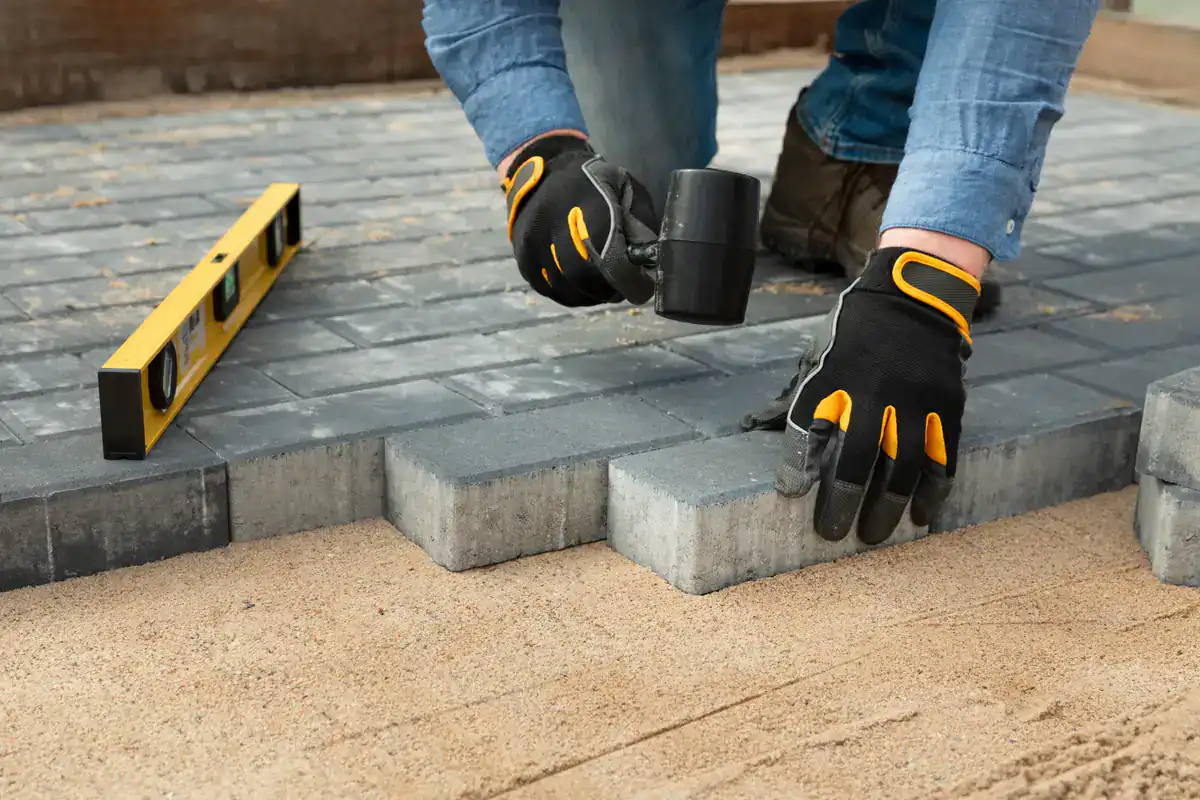
Most driveway installations take between three to seven days, depending on size, material choice, and weather. Concrete driveways need about a week of cure time before you can drive on them, while paver driveways are ready for use as soon as installation is complete.
The timeline breaks down like this: excavation and base prep usually take one to two days, concrete pouring and finishing takes one day (plus cure time), and paver installation takes two to four days depending on the pattern complexity. Weather delays happen, especially during Charlotte’s rainy season, because we can’t pour concrete in the rain or work with saturated soil.
We’ll give you a specific timeline during your estimate and keep you updated if anything changes. Most NoDa homeowners appreciate knowing exactly when they’ll need to keep cars off the driveway and when the project wraps up.
Concrete driveways typically run between $8 to $15 per square foot installed, while paver driveways range from $15 to $30 per square foot, depending on the paver style and pattern complexity. The national average for a standard driveway installation sits around $5,000, but NoDa properties often exceed that because of lot characteristics and material choices.
Pavers cost more upfront but offer advantages that matter in Charlotte’s climate. Individual pavers can be replaced if damaged, they handle freeze-thaw cycles without cracking like concrete does, and they provide better drainage options. Concrete is more affordable initially but can develop cracks that are difficult to repair invisibly.
Your property’s specific conditions affect cost too. If we’re dealing with challenging drainage, steep slopes, or clay soil that needs extra base work, that changes the scope. We’ll walk your property and give you an accurate estimate based on what your driveway actually needs, not a generic price range.
Clay soil is the biggest challenge for any concrete and asphalt contractors working in the Charlotte area. It expands when wet and shrinks when dry, creating movement that cracks driveways and causes settling. We handle it by excavating deeper than you’d need in other soil types and installing a properly compacted aggregate base that stays stable.
The base typically needs to be 6 to 8 inches of compacted gravel, installed in layers. Each layer gets compacted with a plate compactor or roller to achieve maximum density. This creates a stable platform that doesn’t shift with the clay’s expansion and contraction. We also ensure proper drainage so water doesn’t saturate the clay beneath your driveway.
Some contractors skip this step or rush it to save time and money. You’ll see the results in a year or two when the driveway starts cracking or sections begin to heave. We do it right because fixing a failed driveway costs more than building it properly the first time.
Not if it’s installed correctly. Drainage failures cause more driveway problems in Charlotte than any other factor, so we engineer slope and drainage into every installation. Your driveway needs a minimum slope of 1 inch per 8 feet to move water away effectively, and we position that slope to direct water away from your home’s foundation.
During site assessment, we look at where water currently flows on your property, where it pools during storms, and how your lot’s natural grade affects drainage. Sometimes we need to add drainage solutions like channel drains or adjust grading around the driveway. Charlotte’s summer thunderstorms can dump several inches of rain quickly, so your driveway needs to handle high-volume water flow.
Poor drainage creates hydrostatic pressure under your driveway that leads to cracking, causes water to pool near your foundation, and accelerates deterioration of the surface. We’ve seen too many driveways fail because someone ignored drainage, and we won’t let that happen to yours.
Yes, most driveway installations in Charlotte require a permit, especially if you’re changing the driveway’s footprint, altering drainage patterns, or connecting to a public street. The permit ensures your installation meets city codes for slope, drainage, and setback requirements.
We handle the permit process as part of your installation. That includes submitting plans, coordinating inspections, and making sure everything meets code before we start work. Permit requirements vary based on your specific property and what you’re changing, so we’ll assess that during your estimate.
Some homeowners try to skip permits to save money or time, but that creates problems if you ever sell your home or if a neighbor reports unpermitted work. Inspections also catch potential issues before they become expensive problems. It’s worth doing it right.
Concrete driveways need sealing every two to three years to protect against moisture penetration, freeze-thaw damage, and staining. Clean them regularly with a pressure washer to remove dirt and debris, and address any cracks immediately before they spread. Small cracks can be filled, but large interconnected cracks usually indicate structural problems.
Paver driveways require different maintenance. Sweep regularly to prevent dirt buildup in joints, and refill joint sand as needed to keep pavers locked together. Seal pavers every few years to protect color and make cleaning easier. Individual damaged pavers can be replaced without affecting the surrounding area, which is a major advantage over concrete.
Both types benefit from proper drainage maintenance. Keep gutters clean so water doesn’t overflow onto your driveway, and make sure drainage channels stay clear. Charlotte’s clay soil means you need to watch for any settling or movement, especially after heavy rains. Catching small issues early prevents major repairs later.
Other Services we provide in Noda