


You stop worrying about cracks spreading every winter. You stop dealing with puddles that freeze over and create hazards. You stop wondering if that settling spot near your garage is going to get worse.
A driveway built right for North Carolina’s clay soil doesn’t just look better. It drains properly, so water moves away from your foundation instead of pooling where it shouldn’t. It stays level because the base was prepared to handle soil movement, not just poured over whatever was there.
And when it’s done with high-quality pavers or concrete that can flex slightly with temperature swings, you’re not looking at a full replacement in five years. You’re looking at a driveway that holds up through humidity, freeze-thaw cycles, and the kind of weather that destroys shortcuts.
Union Landscaping and Hardscape S Corp is a family-owned company based in Monroe. We’ve been working with homeowners in the Prosperity Church Road Area and surrounding communities for years, and we know exactly what happens when driveways aren’t built for local conditions.
Clay soil shifts. Drainage matters. And if the contractor you hire doesn’t account for both, you’ll be dealing with problems long before you should.
We handle everything from paver driveways to stamped concrete, and every project starts with proper site prep. That means grading for drainage, base material that accounts for clay expansion, and installation depth that can handle vehicle loads without settling over time.

First, we look at your property and talk through what you’re trying to accomplish. That includes drainage concerns, how the driveway connects to your existing landscape, and what materials make sense for your budget and timeline.
Then we handle permits. Most paving installation projects in the Prosperity Church Road Area require them, and we take care of the paperwork so you don’t have to chase down approvals or worry about code compliance.
Once we’re cleared to start, we prep the site. That means excavating to the right depth, grading for proper water flow, and laying base material that’s designed for clay soil conditions. For driveways, that’s typically 12-14 inches of total depth to handle vehicle weight without shifting.
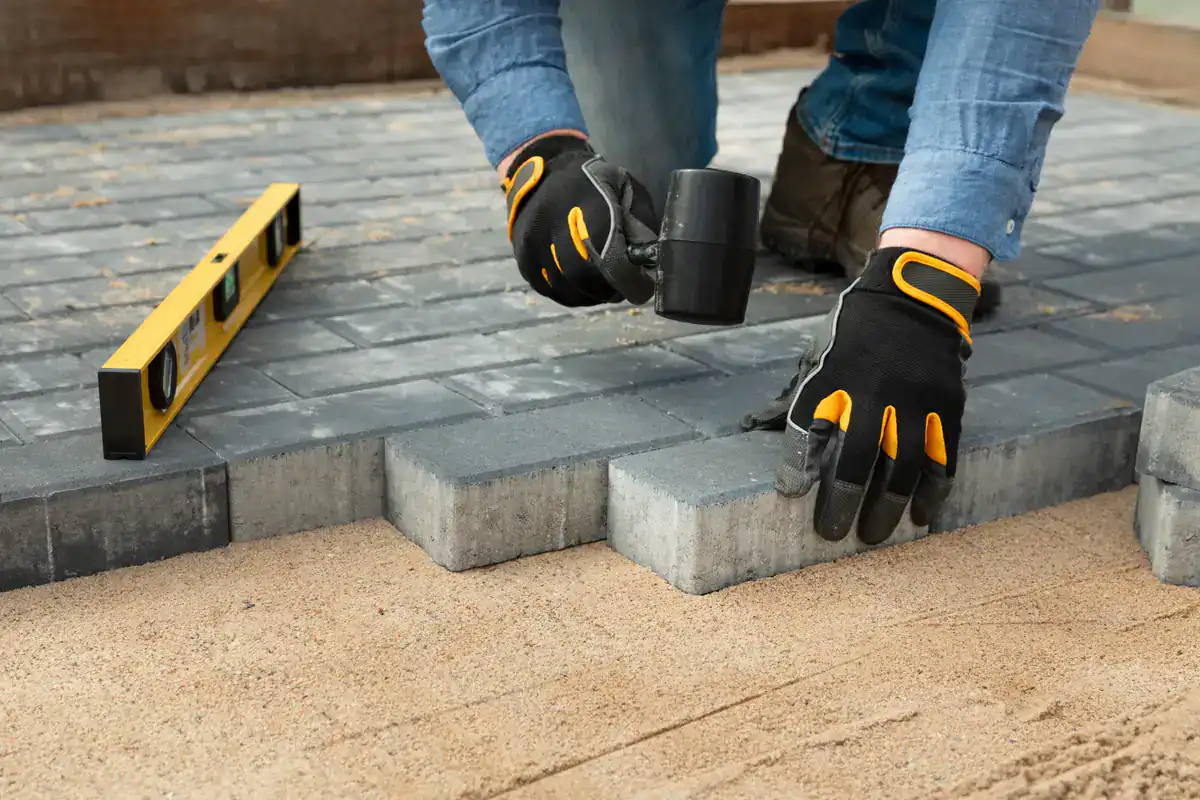
After the base is compacted and leveled, we install your pavers or pour your concrete. Depending on the size of your driveway, installation usually takes three to five days for standard projects. Larger or more complex layouts can take one to three weeks, and we schedule around weather to avoid delays that compromise quality.

Ready to get started?
You get a driveway designed specifically for your property and built to handle Monroe’s soil conditions. That includes site evaluation, drainage planning, and material selection based on what actually performs well here—not just what looks good in a catalog.
We use concrete pavers, natural stone, stamped concrete, or traditional poured concrete depending on your preference. All of them work in North Carolina’s climate when they’re installed correctly. Pavers allow for slight movement without cracking, which is helpful with clay soil. Concrete is durable and cost-effective when the base is done right.
Drainage solutions are built into every installation. That might mean integrating with existing systems, adding new drainage channels, or using permeable materials that let water filter through instead of running off. The goal is to protect your foundation and prevent standing water that leads to damage.
Every project meets local building codes, and we handle inspections if they’re required. You’re not left guessing whether the work was done to standard—it is, and there’s documentation to back it up.
A properly installed concrete driveway in the Prosperity Church Road Area typically lasts 20 to 30 years. That timeline assumes the base was prepared correctly, drainage was accounted for, and the concrete was poured at the right depth for vehicle loads.
The biggest factor isn’t the concrete itself—it’s what’s underneath. North Carolina’s clay soil expands when wet and contracts when dry, which creates movement. If the base isn’t designed to handle that, you’ll see cracks and settling within a few years no matter how good the concrete is.
We excavate to the proper depth, use compacted base material that allows for drainage, and grade everything so water moves away from the driveway instead of pooling underneath. That’s what gets you to 20-plus years instead of needing repairs at year five.
Pavers and concrete both work well in the Prosperity Church Road Area when they’re installed right. The difference comes down to how they handle movement and what kind of look you’re going for.
Pavers are individual units, so they can shift slightly with soil movement without cracking. That makes them a good choice for clay soil conditions. They also come in different colors and patterns, and if one paver gets damaged, you can replace it without redoing the whole driveway. The tradeoff is they cost more upfront and require occasional re-leveling if the base settles unevenly.
Concrete is poured as one continuous surface, so it’s faster to install and generally less expensive. It’s durable and low-maintenance, but if it cracks, the repair is more visible. Stamped or decorative concrete gives you more design options while keeping costs closer to standard concrete.
Both need the same level of base preparation and drainage work. The material you choose doesn’t matter as much as whether the installation was done correctly.
Drainage gets built into the project from the start. We grade your driveway so it slopes away from your house and garage, which keeps water from running toward your foundation. That’s usually a slope of about 1-2%—enough to move water without being noticeable when you’re driving on it.
If your property has clay soil that doesn’t absorb water quickly, we may integrate drainage channels or use permeable pavers that let water filter through to the base layer instead of running off. That prevents pooling and reduces the chance of erosion under the driveway.
We also look at how your driveway connects to existing drainage systems—gutters, downspouts, yard grading. If water from your roof is dumping onto the driveway, we address that so you’re not creating new problems while fixing old ones. Proper drainage isn’t an add-on. It’s part of the installation, and it’s why some driveways last decades while others start failing in a few years.
Most driveway projects in Monroe and the Prosperity Church Road Area require a permit, especially if you’re expanding your driveway, changing the grade, or connecting to a public road. The permit process makes sure the work meets local codes for drainage, setbacks, and accessibility.
We handle permit applications for you. That includes submitting plans, coordinating inspections, and making sure everything is approved before we start work. It usually adds a week or two to the timeline depending on how quickly the county processes applications, but it’s not something you have to manage yourself.
Skipping permits might seem like a way to save time, but it creates problems if you ever sell your home or need to file an insurance claim. Unpermitted work can delay closings or require expensive corrections. We make sure everything is documented and compliant so you don’t run into issues down the road.
Cost depends on the size of your driveway, the material you choose, and how much site prep is needed. Standard concrete typically runs $4 to $10 per square foot in the Prosperity Church Road Area. Pavers cost more—usually $12 to $18 per square foot—because of the labor involved and the material itself.
If your property has drainage issues, unstable soil, or requires significant excavation, that adds to the cost. Same with decorative finishes, stamped patterns, or integrating the driveway with existing hardscape features.
A single-car driveway averages around $2,500 for basic concrete. Larger driveways or more complex projects can run $5,000 to $10,000 or more depending on what’s involved. We give you a clear estimate upfront after we’ve looked at your property, so you know what you’re paying for and why. There’s no guessing, and no surprises halfway through the job.
Clay soil is the main reason. North Carolina has clay-heavy soil that expands when it gets wet and shrinks when it dries out. That constant movement puts pressure on anything sitting on top of it, and if the base wasn’t designed to handle that, you get cracks and settling.
Poor drainage makes it worse. If water pools under your driveway or doesn’t have anywhere to go, it saturates the soil and accelerates the expansion-contraction cycle. Over time, that creates voids under the concrete or pavers, and sections start sinking.
The other issue is inadequate base preparation. If the contractor didn’t excavate deep enough, didn’t use the right base material, or didn’t compact it properly, the driveway doesn’t have a stable foundation. It might look fine for a year or two, but once the soil shifts or settles, the driveway goes with it. Proper installation accounts for all of this before the concrete gets poured or the pavers go down.
Local Resources
Other Services we provide in Prosperity Church Road Area