


Your driveway isn’t just a place to park. It’s the first thing people see when they pull up, and it’s taking a beating from vehicles, weather, and whatever West End’s clay soil decides to do underneath it.
When it’s done right, you’re not dealing with water pooling near your garage. You’re not watching cracks spread across the surface every spring. You’re not calling someone back out in two years because sections started sinking.
A solid driveway installation in West End, NC means proper base prep that accounts for our soil conditions. It means drainage solutions built into the design so water moves away from your foundation, not toward it. It means materials that can handle temperature swings and the weight of your vehicles without breaking down.
You get curb appeal that lasts. You get a surface that holds up. And you get one less thing to worry about when it rains or when you’re thinking about selling down the road.
Union Landscaping and Hardscape S Corp is a family-owned company based in Monroe, serving West End and the surrounding Sandhills communities. We’re licensed and insured, and we’ve built our reputation on hardscape work that doesn’t need a redo in three years.
We know what West End’s soil does to improperly installed driveways. We’ve seen what happens when contractors skip base prep or ignore drainage. That’s why we handle the details that matter: proper excavation depth, compacted aggregate base, and grading that moves water where it needs to go.
You’re working with people who live here, understand the local conditions, and have installed driveways across the area. We’re not the cheapest option, and that’s intentional. You’re paying for materials and methods that hold up in North Carolina’s climate.

First, we come out to look at your property. We’re checking slope, drainage patterns, soil conditions, and how the driveway connects to your garage or street. This tells us what base depth you need and where water wants to go.
Next, we excavate to the right depth. For West End’s clay soil, that usually means going deeper than you’d think and removing material that’s going to shift or hold water. We’re creating a stable foundation, not just scraping the surface.
Then we install a compacted aggregate base. This is what keeps your driveway from settling or cracking when the ground moves. We grade it so water drains away from your home and compact it in layers so it doesn’t shift under weight.
After that, we install your chosen material—whether that’s concrete, asphalt paving, or high-quality pavers. Each one has a different process, but the base prep stays the same because that’s what determines how long your driveway lasts.
Finally, we handle cleanup and make sure you understand how to maintain what we just installed. Concrete needs sealing. Pavers might need occasional re-sanding. Asphalt benefits from sealcoating. We’ll tell you what to expect.

Ready to get started?
You’ve got three main options for driveway installation in West End, NC: concrete, asphalt, or pavers. Each one works, but they’re not interchangeable.
Concrete driveways last 25 to 30 years if they’re installed correctly and maintained. They handle West End’s heat without softening, and they don’t need much upkeep beyond occasional sealing. We can add decorative finishes if you want something beyond plain gray, and the material holds up well under North Carolina’s freeze-thaw cycles.
Asphalt paving costs less upfront and installs faster. It’s flexible, so it handles minor ground movement better than concrete. But it needs sealcoating every few years, and West End’s summer heat can soften it if it’s not thick enough. Expect to pay between $6 and $9 per square foot for asphalt installation.
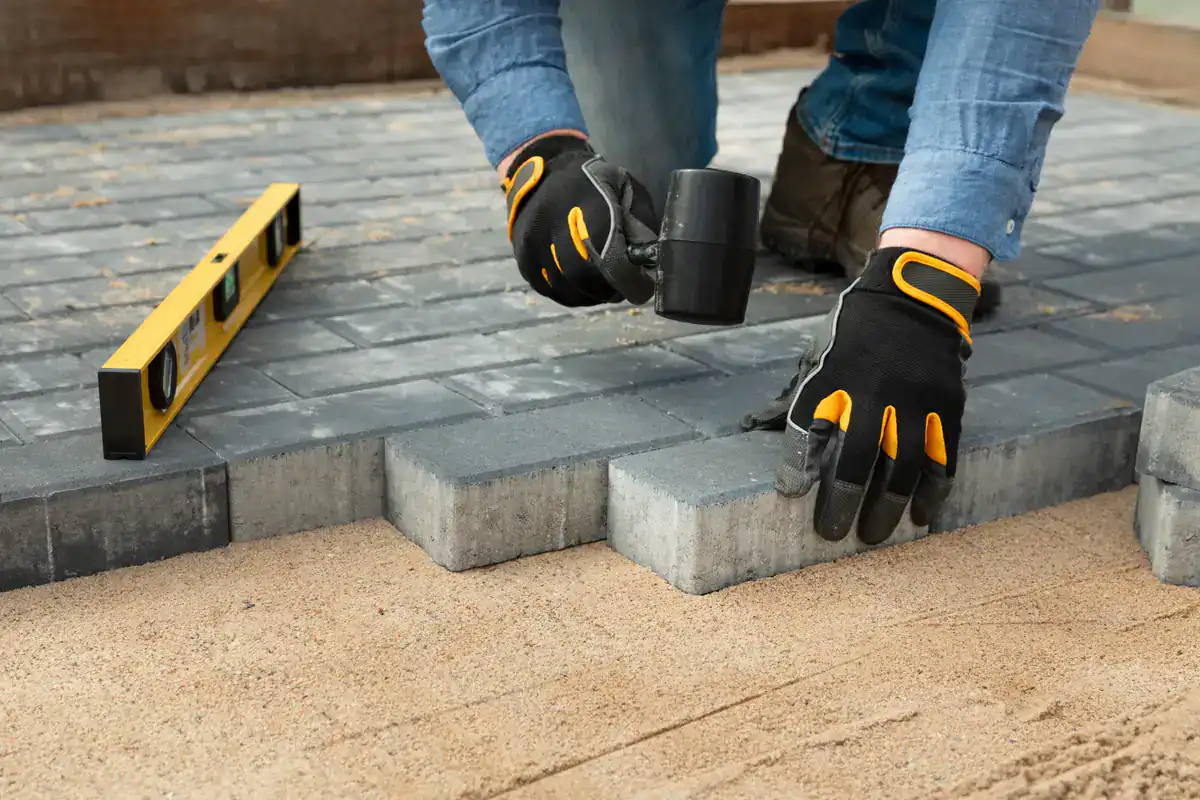
Pavers give you the most design flexibility. You can choose patterns, colors, and materials that match your home’s style. They’re also easier to repair—if one section settles, you lift and reset those pavers instead of replacing an entire slab. Permeable pavers even help with drainage by letting water pass through instead of running off. They take longer to install and cost more, but they add real curb appeal and can increase your home’s value.
All three options work in West End if the base is done right. Your choice comes down to budget, how long you’re planning to stay in the house, and what look you’re going for.
Most driveway installations take between three and five days, depending on size and material. That includes excavation, base prep, material installation, and cleanup.
Concrete driveways need extra time to cure before you can drive on them—usually seven days for light vehicles and longer for heavier trucks. Asphalt paving can handle light traffic in a day or two, but it’s best to wait a week before parking heavy vehicles. Pavers are ready to use as soon as we finish installing them.
Weather affects the timeline. We can’t pour concrete or lay asphalt in freezing temperatures or heavy rain. West End’s spring and fall are ideal for paving installation because temperatures are moderate and rain is less frequent. Summer works too, but extreme heat can make asphalt harder to work with.
West End’s clay soil is the main culprit. Clay expands when it gets wet and contracts when it dries out. If your driveway doesn’t have a proper base underneath, that movement cracks concrete and causes sections to sink.
Poor drainage makes it worse. When water pools under your driveway, it creates pressure that pushes up from below. In winter, that water can freeze and expand, which cracks even thick concrete. Clay soil doesn’t drain naturally, so water sits there unless your driveway installation includes drainage solutions.
Skipping base prep is the other common cause. Some contractors lay concrete or asphalt directly over graded dirt to save time. That works for a year or two, then the ground settles and your driveway goes with it. A compacted aggregate base distributes weight evenly and gives water somewhere to go besides up into your driveway.
We typically charge between $8 and $18 per square foot for concrete, depending on thickness and finish. A standard two-car driveway runs around 600 square feet, so you’re looking at $4,800 to $10,800 for concrete.
Asphalt paving costs less—usually $6 to $9 per square foot installed. That same 600-square-foot driveway would run $3,600 to $5,400. Asphalt is cheaper upfront but needs more maintenance over time, so factor in sealcoating costs every few years.
High-quality pavers are the most expensive option, typically $10 to $25 per square foot depending on the material and pattern. Permeable pavers and porcelain pavers cost more than basic concrete pavers, but they offer better drainage and more design options.
These prices include excavation, base prep, material, and labor. If your property has drainage issues or needs extra grading work, that adds to the cost. We’ll give you an exact number after we see your property.
Concrete and pavers both handle West End’s climate well. They don’t soften in summer heat, they manage freeze-thaw cycles without major damage, and they last decades if installed correctly.
Concrete is the most common choice because it’s durable and low-maintenance. It handles North Carolina’s humidity and temperature swings without breaking down. The main risk is cracking from ground movement, which is why proper base prep matters so much here.
Pavers perform even better in West End’s soil conditions because they’re individual units, not one solid slab. When the ground shifts slightly, pavers move with it instead of cracking. If a section does settle, you can lift and reset those pavers without tearing out the whole driveway.
Asphalt works here too, but it requires more upkeep. West End’s summer heat can soften asphalt if it’s not thick enough or if it hasn’t been sealcoated recently. It’s a solid choice if you’re watching your budget and don’t mind maintaining it every few years.
Most driveway installations in West End require a permit, especially if you’re changing the driveway’s footprint or connecting to a public road. Moore County has specific requirements for setbacks, drainage, and how your driveway connects to the street.
If you’re replacing an existing driveway in the same location, the permit process is usually simpler. If you’re adding a new driveway or expanding the current one, expect more paperwork and possibly an inspection.
We handle permit applications as part of our service. We know what Moore County requires, and we make sure the installation meets local codes. That protects you if you ever sell the house—unpermitted work can cause problems during a sale and might need to be redone to meet code.
Concrete driveways need sealing every two to three years to protect against moisture and staining. West End’s humidity can cause concrete to absorb water over time, which leads to cracking when temperatures drop. A good sealer prevents that.
Asphalt paving needs sealcoating every two to four years. This fills small cracks before they spread and protects the surface from UV damage and water penetration. Asphalt that’s not sealcoated regularly breaks down faster, especially in North Carolina’s climate.
Pavers need less maintenance overall. You might need to re-sand the joints every few years if the sand washes out, and you should rinse them occasionally to prevent staining. If a paver cracks or settles, you can replace just that section without affecting the rest of the driveway.
For all three materials, keep the surface clean and address drainage issues as soon as you notice them. Water is the enemy of every driveway, so if you see pooling or erosion, deal with it before it causes damage.
Other Services we provide in West End