
Summary:
Retaining walls do more than hold back soil—they transform sloped yards into functional outdoor spaces while protecting your property from erosion and water damage.
Whether you’re dealing with a challenging slope or want to create terraced garden beds, understanding the basics of retaining wall design, installation, and maintenance helps you make informed decisions. This guide covers material options, cost considerations, and practical tips to keep your wall performing well for decades.
Table of contents
Why Retaining Walls Matter for Your Property
Retaining walls aren’t just decorative features. They’re working structures that manage soil, control water flow, and create stability where your yard would otherwise shift, erode, or become unusable.
If your property has any kind of slope, you’ve probably noticed how rain can carve channels through your landscaping, wash away mulch, or leave bare spots where grass used to grow. That’s erosion at work. Over time, it doesn’t just ruin your yard’s appearance—it can undermine foundations, damage driveways, and create drainage problems that affect your home’s structural integrity.
A properly built retaining wall holds soil in place, redirects water where it needs to go, and turns challenging terrain into functional outdoor space. That might mean leveling an area for a patio, creating terraced garden beds, or simply preventing your backyard from sliding downhill during heavy storms.

How Retaining Walls Control Erosion and Manage Water
Charlotte and surrounding areas in Mecklenburg County, NC average about 43 inches of rainfall per year. That’s more than the national average, which means your property deals with a lot of water movement. When rain hits a slope without anything to slow it down, it takes your topsoil with it.
Retaining walls work by creating a barrier that holds soil in place while allowing water to drain properly. The key word there is “properly.” A wall without adequate drainage becomes a dam, and water pressure building up behind it will eventually cause the structure to fail—cracking, leaning, or even collapsing.
That’s why professional installation includes drainage solutions like weep holes, perforated pipes behind the wall, and gravel backfill that lets water escape without creating pressure. These aren’t optional extras. They’re essential components that determine whether your wall lasts five years or fifty.
Beyond preventing erosion, retaining walls redirect water flow away from vulnerable areas. If you’ve ever dealt with water pooling near your foundation or flooding in your basement after a storm, a strategically placed wall with proper drainage can eliminate those problems. It intercepts runoff before it reaches your home, channels it to appropriate drainage points, and protects both your landscaping and your foundation from water damage.
The science behind it is straightforward: soil on a slope wants to move downhill due to gravity, and water accelerates that movement. A retaining wall counteracts those forces by providing lateral support. The wall’s weight, its foundation, and its drainage system all work together to create a stable barrier that keeps your landscape exactly where you want it.
Creating Usable Space from Sloped Terrain
One of the most practical benefits of retaining walls is how they transform unusable slopes into functional outdoor areas. If you’ve been frustrated by a yard that’s too steep for kids to play on, too uneven for outdoor furniture, or too sloped for the garden you’ve been planning, a retaining wall changes what’s possible.
Terracing is the process of creating multiple level areas on a slope using a series of retaining walls. Instead of one tall wall (which would require engineering approval and significant structural support), you build several shorter walls that step down the hillside. Each terrace becomes a usable platform—one level might hold a patio and outdoor seating, another could be garden beds or raised planters, and a third might provide a flat play area for kids.
This approach doesn’t just make your yard more functional. It adds visual interest and dimension to your landscape. A flat yard can feel monotonous, but terraced levels create depth, define different outdoor “rooms,” and give you opportunities to incorporate various plantings, hardscape features, or focal points at each level.
For homeowners in Monroe and surrounding areas, this means getting more value from every square foot of property. That steep backyard that’s been sitting empty becomes an outdoor entertainment space. The sloped side yard transforms into a series of herb gardens. The unusable area behind your deck turns into a level lawn where kids can actually play.
The walls themselves can serve multiple purposes too. Cap them at a comfortable height and they become built-in seating for gatherings. Design them with integrated planters and you’ve got raised beds that are easier to maintain than ground-level gardens. Position them strategically and they provide privacy screening while also managing your terrain.
Want live answers?
Connect with a Union Landscaping and Hardscape expert for fast, friendly support.
Choosing the Right Materials for Your Retaining Wall
Material choice affects everything about your retaining wall—how it looks, how long it lasts, how much it costs, and how well it performs. There’s no single “best” material. The right choice depends on your wall’s height, your soil conditions, your aesthetic preferences, and your budget.
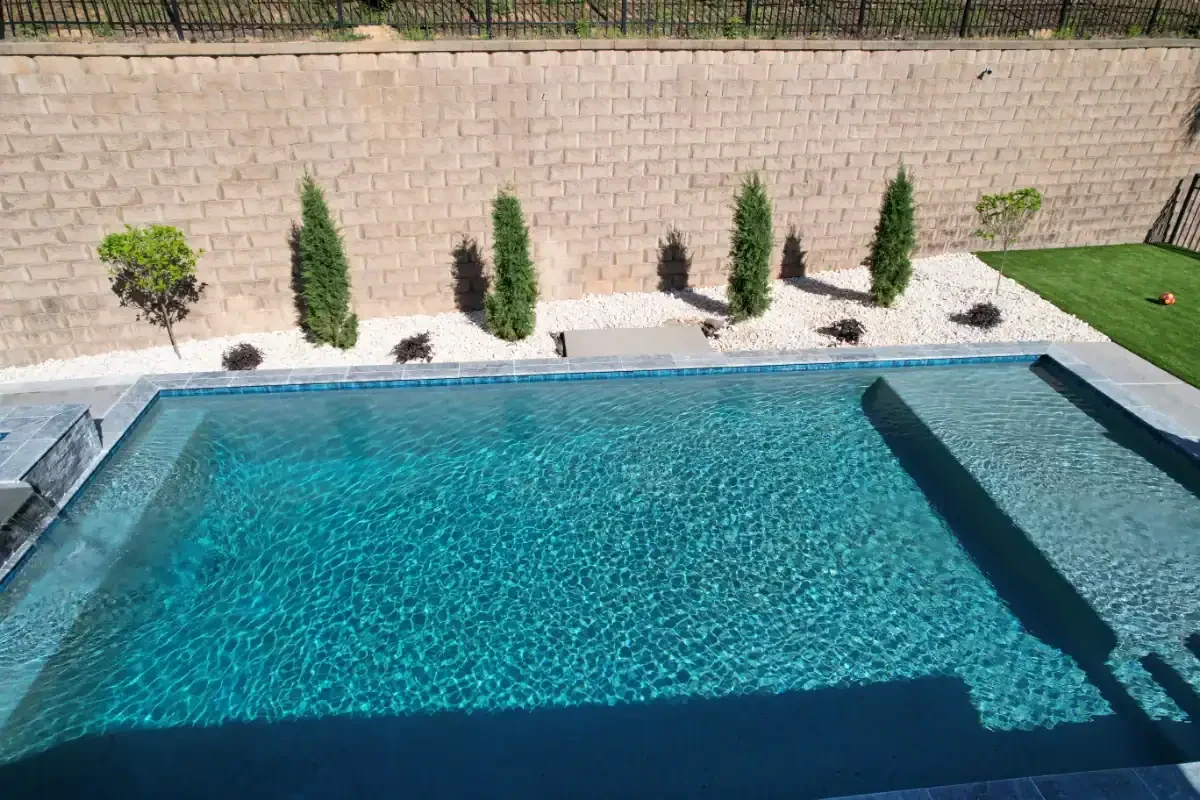
Concrete blocks are the most popular choice for residential retaining walls in Mecklenburg County, NC. They’re engineered for strength, come in various colors and textures, and interlock in ways that make installation more straightforward than hand-stacked stone. They’re also more affordable than natural stone while still offering an attractive appearance that complements most home styles.
Natural stone provides a timeless, high-end look that many homeowners prefer. Options include fieldstone, bluestone, limestone, and granite. Stone walls can be dry-stacked (no mortar) or mortared, depending on height and structural requirements. The main trade-offs are cost and installation complexity—stone typically runs higher than concrete blocks and requires more skilled labor to install properly.

Comparing Costs and Durability of Wall Materials
Understanding cost helps you plan realistically and avoid surprises. In Mecklenburg County, NC, retaining wall installation typically ranges from about $35 to $65 per square foot, including materials and professional labor. That’s a wide range because material choice makes a significant difference.
Vinyl is the most budget-friendly option at roughly $10-$15 per square foot. It works well for shorter walls that don’t need to support heavy loads, but it’s not ideal for taller structures or areas with significant soil pressure. Timber offers a natural, warm appearance at $15-$25 per square foot. Pressure-treated wood resists decay, but even quality timber won’t last as long as masonry materials—expect 15-20 years with proper maintenance versus 50-100 years for concrete or stone.
Concrete blocks fall in the mid-range at $20-$45 per square foot depending on style and finish. They offer excellent durability, require minimal maintenance, and provide good structural strength for walls up to about 4 feet without additional engineering. For taller walls, reinforced concrete or engineered block systems may be necessary, which increases cost but ensures safety and longevity.
Natural stone typically runs $15-$95 per square foot, with the wide range reflecting different stone types and installation methods. Granite tends to be more affordable within the stone category, while cut limestone or bluestone costs more. The investment pays off in appearance and durability—a properly built stone wall can last a century or more with minimal maintenance.
Labor represents 40-60% of your total project cost. Professional installation ensures proper foundation preparation, correct drainage integration, and structural integrity that DIY projects often lack. For walls over 3-4 feet tall, professional installation isn’t just recommended—it’s essential for safety and compliance with local building codes. In Mecklenburg County, walls over 5 feet require permits and often need engineering approval.
Site conditions also affect cost. Difficult access, rocky soil that requires extra excavation, or slopes that need extensive grading all increase labor time and expenses. We assess these factors during the estimate process to give you accurate pricing for your specific situation.
Material Performance in North Carolina's Climate
North Carolina’s climate presents specific challenges for retaining walls. You’ve got hot, humid summers, moderate winters with occasional freezing, and significant rainfall throughout the year. The right material needs to handle moisture, temperature fluctuations, and the freeze-thaw cycles that can damage poorly chosen or improperly installed walls.
Concrete and concrete blocks perform exceptionally well in this climate. They resist moisture absorption when properly sealed, handle freeze-thaw cycles without significant cracking, and don’t rot or decay like organic materials. Modern concrete products also come with integral water-repellent additives that improve long-term performance.
Natural stone is equally durable in North Carolina’s conditions. Dense stones like granite, limestone, and bluestone resist weathering and don’t degrade from moisture exposure. Their thermal mass actually helps moderate temperature swings, and they’re not affected by freeze-thaw damage the way some porous materials can be.
Timber faces more challenges in our climate. High humidity and regular rainfall create conditions where wood decay accelerates, even with pressure treatment. Termites and other wood-boring insects are active in this region, adding another maintenance concern. If you choose timber for aesthetic reasons, plan for more frequent inspections and expect to replace the wall sooner than you would with masonry options.
Regardless of material, proper installation with adequate drainage is what really determines performance. A concrete wall without proper drainage will fail faster than a well-built timber wall with excellent water management. The material matters, but the installation quality matters more.
Sealing and waterproofing also extend lifespan. For concrete and stone walls, applying a breathable sealant every few years reduces moisture infiltration and prevents efflorescence (those white mineral deposits that can appear on masonry). For timber walls, annual application of wood preservative protects against rot and insect damage.
Maintaining Your Retaining Wall for Long-Term Performance
A well-built retaining wall requires surprisingly little maintenance, but that doesn’t mean no maintenance. Regular inspections and basic care keep small issues from becoming expensive repairs and ensure your wall protects your property for decades.
Inspect your wall at least twice a year—once in spring after winter weather and again in fall before winter arrives. Look for cracks in the material, signs of leaning or bulging, gaps between blocks or stones, and areas where soil has eroded behind the wall. Also check that drainage elements like weep holes aren’t clogged with debris.
After heavy storms, do a quick visual check for any changes. Water is the most common cause of retaining wall failure, so catching drainage problems early prevents bigger issues. If you notice water staining on the wall face, pooling behind the wall, or saturated soil that doesn’t drain within a day or two of rain, your drainage system needs attention.
Keep vegetation managed around your wall. Plants add beauty, but roots growing into or behind the wall can create pressure and cause shifting. Trim back shrubs and vines that grow directly on the wall surface, and avoid planting large trees within several feet of the structure. Ground covers and small perennials work well near retaining walls without creating structural concerns.
Clean your wall periodically to maintain appearance and prevent organic buildup that can trap moisture. For most walls, a simple rinse with a garden hose removes dirt and debris. For tougher stains or buildup, a pressure washer on a moderate setting works well—just avoid blasting mortar joints or getting too close to the surface, which can cause damage.
Address problems promptly when you notice them. A small crack caught early might need simple patching. Ignored, that same crack can allow water infiltration, freeze-thaw damage, and structural compromise that requires major repairs or even wall replacement. The same applies to minor settling or slight leaning—early intervention is far less expensive than waiting until the wall fails.
If you’re in Mecklenburg County, NC and need professional help with retaining wall design, installation, or maintenance, we bring expert craftsmanship and attention to detail to every project, creating outdoor spaces that are both beautiful and built to last.