
Summary:
Your patio furniture is sitting there. The grill hasn’t been fired up in weeks. That expensive outdoor space you invested in? It’s empty again because it’s 92 degrees at 3 PM and there’s nowhere to escape the sun.
You’re not alone. Most Mecklenburg County homeowners retreat indoors the moment North Carolina’s summer heat kicks in, leaving thousands of dollars in outdoor investments unused for half the year.
Architectural louvered pergolas solve that problem. Not with fixed shade that traps heat or fabric canopies that need constant replacement—but with motorized aluminum slats that adjust in real time to give you exactly the coverage you need, when you need it. Let’s talk about how they actually work and why they’re becoming the go-to solution for outdoor living in NC.
What Makes Louvered Pergolas Different from Traditional Pergolas
Traditional pergolas offer partial shade through fixed wooden slats. They look nice. They define space. But they can’t respond to weather.
When the afternoon sun shifts, you’re stuck. When a storm rolls in, your furniture gets soaked. When humidity makes the air feel like a wet blanket, there’s no airflow control.
Louvered pergolas use adjustable aluminum slats instead of static beams. Those slats rotate up to 150 degrees, controlled by a remote or smartphone app. Open them to let light through on a cool morning. Angle them to block direct sun during peak heat. Close them completely when rain starts, and the integrated gutter system channels water away through posts that double as downspouts.

How Motorized Louvers Control Temperature and Weather
The real advantage shows up when North Carolina weather does what it always does—changes fast.
You’re hosting a Saturday afternoon cookout. The sun’s beating down. You tap your phone, and the louvers rotate to block direct rays while still allowing airflow. Temperature under the pergola drops by 5 to 8 degrees. Your guests stop sweating. The conversation continues.
An hour later, clouds roll in and rain starts. You close the louvers with another tap. The slats lock together to form a solid roof. Water runs through hidden channels in the beams and down through the posts. Your outdoor furniture stays dry. The party doesn’t move inside.
That’s the functional difference. You’re not guessing whether today will be comfortable outside. You’re controlling the environment in real time. Morning coffee in filtered light. Afternoon shade when the sun’s overhead. Evening dinners under open sky once temperatures cool.
The system isn’t complicated. Motors built into the pergola frame rotate the slats. Rain sensors can automate the process—louvers close automatically when moisture is detected. Wind sensors do the same during storms. You can override everything manually or set schedules based on time of day.
For Mecklenburg County homeowners, this matters because our weather doesn’t cooperate with fixed structures. You need flexibility. Louvered systems give you that without requiring you to run outside every time conditions change.
The materials matter too. High-grade aluminum alloy resists rust and handles humidity without warping. Powder-coated finishes last 30-plus years without fading. You’re not repainting every few seasons or replacing rotted wood beams. The structure handles freeze-thaw cycles, summer heat, and everything between without maintenance beyond occasional cleaning.
Why Aluminum Outperforms Wood for NC Climate
Wood pergolas have charm. Cedar smells great. Treated pine costs less upfront. But in North Carolina’s climate, wood becomes a maintenance project.
Humidity causes swelling. Temperature swings cause cracking. UV exposure fades stain. Every two to three years, you’re sanding, sealing, and refinishing. Miss a season, and rot starts. Insects find weak spots. Structural integrity degrades.
Aluminum doesn’t have those problems. It doesn’t absorb moisture. It doesn’t warp when temperatures swing from freezing nights to 90-degree afternoons. It doesn’t need sealing or staining. The powder-coated finish resists scratches, rust, and UV damage for decades.
The structural strength is different too. Aluminum alloy 6005 T5—the grade used in quality louvered pergolas—withstands wind loads up to 60 mph. That matters during summer storms when gusts hit hard and fast. Wood can crack under stress. Aluminum flexes slightly and returns to shape.
Cost comparison gets interesting when you factor in maintenance. A cedar pergola might cost $6,000 installed. Over 15 years, you’ll spend another $2,000 to $3,000 on staining, sealing, and repairs. An aluminum louvered pergola costs $10,000 to $15,000 upfront but requires virtually no maintenance. You’re ahead financially by year 10, and you’ve gained weather control and automation that wood can’t offer.
Weight is another factor. Aluminum is lighter, which means less stress on mounting points if you’re attaching to your home. Installation is cleaner. Adjustments are easier. And if you ever want to add integrated lighting, fans, or screens, aluminum frames accommodate electrical runs without the fire risk that comes with drilling through wood near wiring.
For homeowners serious about year-round outdoor living, aluminum makes sense. You’re not choosing between aesthetics and function. Modern louvered designs offer clean lines, multiple color options, and architectural integration that complements both traditional and contemporary homes. You get the look you want with performance wood can’t match.
Want live answers?
Connect with a Union Landscaping and Hardscape expert for fast, friendly support.
How Louvered Pergolas Extend Outdoor Living in Mecklenburg County
The goal isn’t just shade. It’s making your outdoor space usable when you actually want to be outside.
In Mecklenburg County, that means dealing with summer heat, sudden afternoon storms, high humidity, and temperature swings between seasons. A louvered pergola handles all of it by giving you control instead of hoping weather cooperates.
You’re not limited to the three months of perfect spring weather. You’re using your patio in July because you can block the sun and keep air moving. You’re outside in October because you can let warmth through while protecting from wind. You’re hosting in April despite unpredictable rain because you can close the roof in seconds.
That extended usability changes how you think about outdoor investment. Your furniture isn’t seasonal anymore. Your grill gets year-round use. The space becomes an actual room—just one without walls.

Creating Defined Outdoor Rooms with Hardscape Design
A louvered pergola doesn’t just cover space. It defines it—and when we integrate it with thoughtful hardscape design, it becomes the centerpiece of a complete outdoor living suite.
Without structure, your patio is open area. There’s no sense of purpose. No clear zones for different activities. Adding a pergola creates an outdoor room with defined boundaries and intended use, anchoring your entire landscape architecture.
You can position it over your dining table to create an outdoor eating area. The louvers provide overhead definition while allowing views outward. Integrated landscape lighting turns it into an evening entertainment zone. Add a ceiling fan, and you’ve got air circulation that makes summer dinners comfortable.
Or place it over a lounge area with seating and a fire pit. The pergola creates a gathering space that feels intentional. When louvers are open, you get starlight. When they’re angled, you get shade without losing the outdoor feel. The structure signals “this is where we relax” without walls blocking connection to the rest of your yard.
For larger properties, multiple pergolas can create different zones. One over the outdoor kitchen area with weather-resistant cabinetry and prep counters. Another over dining with ambient lighting. A third over a conversation pit with an outdoor fireplace or fire feature. Each space has its own microclimate that you control independently.
The architectural impact matters too. A well-designed pergola becomes a focal point. It draws the eye. It creates visual interest. When attached to your home, it extends your roofline and creates seamless indoor-outdoor flow. When freestanding, it anchors landscape design and gives structure to open areas.
Material choice affects this significantly. Sleek aluminum profiles create modern, clean lines. Neutral colors—black, white, bronze, gray—complement both traditional and contemporary architecture. The structure enhances rather than competes with your home’s existing design.
For Mecklenburg County homeowners thinking about resale value, this matters. Buyers don’t just want outdoor space. They want defined outdoor living areas they can immediately envision using. A louvered pergola integrated with paver patios, retaining walls, and professional hardscaping delivers that. They see the dining area. They picture themselves hosting. They understand the value without explanation.
Integrating Smart Technology and Landscape Lighting for Year-Round Use
Smart integration takes louvered pergolas from functional to exceptional—and when we combine them with professional landscape lighting, your outdoor space becomes as usable after sunset as it is during the day.
The basic motorization is straightforward—a remote control opens, closes, or angles the louvers. But modern systems go further. Smartphone apps let you control everything from inside your house. You’re making coffee and notice clouds rolling in. You close the louvers before rain hits your outdoor furniture.
Voice control through home automation systems adds another layer. You’re cooking at the outdoor kitchen and don’t want to stop to grab your phone. You tell your smart system to close the pergola. It happens.
Rain sensors automate the process completely. The system detects moisture and closes louvers automatically. You’re not home when the storm hits. Your furniture stays dry anyway. Wind sensors do the same—strong gusts trigger automatic closure to protect the structure and anything underneath.
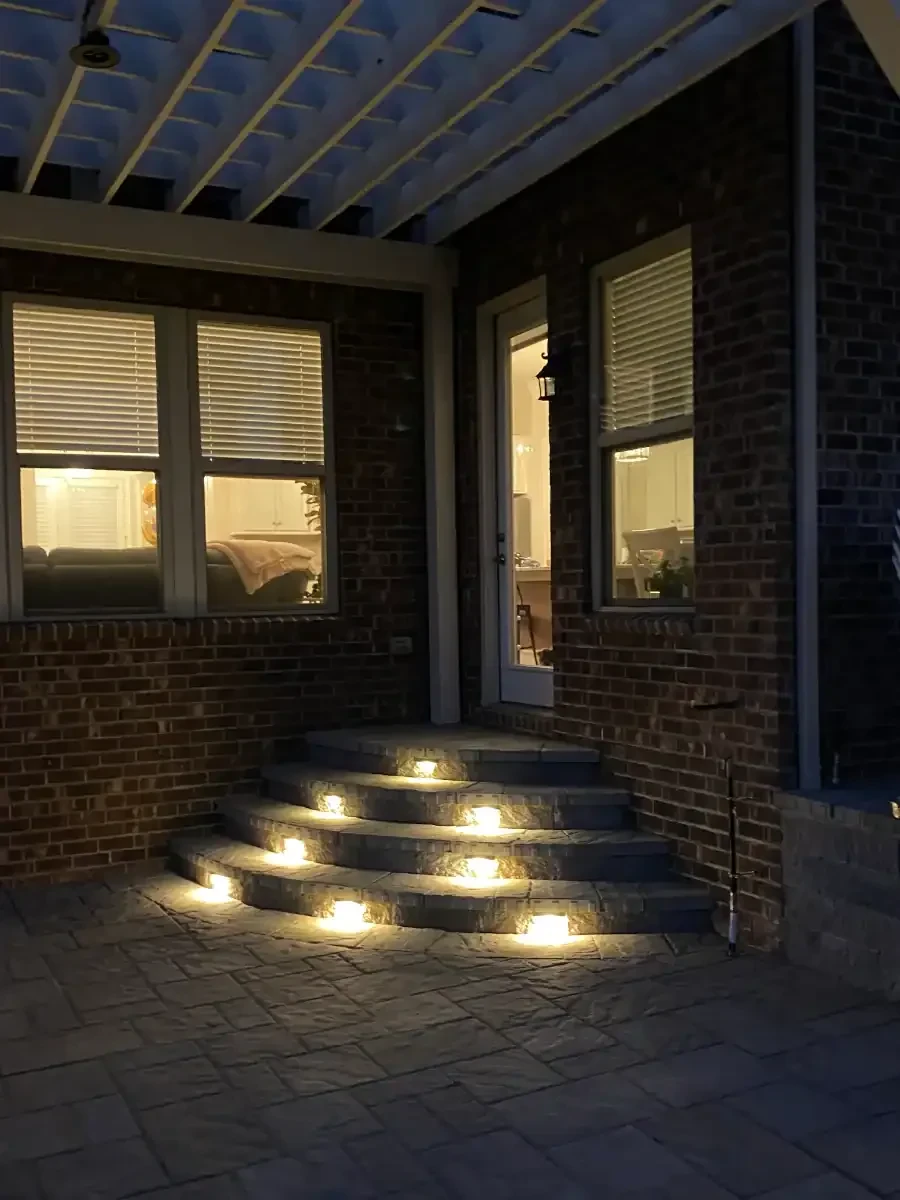
Landscape lighting integration changes how you use the space after dark. Recessed LED fixtures built into the pergola beams provide task lighting over dining or cooking areas. String lights create ambiance for entertaining. Accent lighting highlights landscaping around the structure, showcasing retaining walls, plantings, and hardscape features. All of it controlled through the same app that manages your louvers.
Color temperature matters more than most people realize. Cool white light works for cooking and tasks. You see what you’re doing clearly. Warm amber tones create relaxation and conversation. Smart systems let you adjust color temperature based on activity. Cooking mode gives you bright, cool light. Dinner mode shifts to warm, dimmed ambiance.
Ceiling fans extend usability during humid months. Even when temperature is reasonable, North Carolina humidity makes air feel heavy. A fan creates circulation that makes the space comfortable. Combine it with angled louvers that allow airflow, and you’ve created a microclimate that’s significantly more pleasant than open patio space.
Heating elements push the season even further. Radiant heaters built into the pergola structure or standalone units positioned strategically make October and November evenings comfortable. You’re outside enjoying fall weather instead of retreating indoors when sun sets and temperature drops. Pair that with a fire pit or outdoor fireplace, and you’ve got a gathering space that works into winter.
The investment in smart features and professional lighting pays off in increased use. Your outdoor space isn’t just for perfect weather days. It’s for any day you choose to be outside. That extended usability is what separates architectural pergolas from basic shade structures.
Making the Smart Investment in Outdoor Living
Louvered pergolas aren’t the cheapest outdoor upgrade. But they’re among the smartest.
You’re getting weather protection that extends your outdoor season by months. You’re gaining climate control that makes summer heat manageable. You’re adding 50 to 80 percent of the installation cost back in property value when you sell. And you’re creating outdoor living space that you’ll actually use instead of admiring from inside your air-conditioned house.
For Mecklenburg County homeowners, that combination of function, durability, and return on investment makes architectural pergolas the standout choice for 2026. The technology works. The materials last. The results deliver.
If you’re ready to transform your outdoor space into something you use year-round—complete with hardscape design, landscape lighting, and integrated outdoor features—we bring the expertise and local knowledge to make it happen right.