Summary:
Your backyard has potential. But if your patio turns into a hot plate every summer afternoon, or you pack it in the moment temperatures drop in October, you’re not getting your money’s worth.
Homeowners in Mecklenburg County, NC face a specific challenge: how do you create an outdoor space that handles both July heat and November chill? The answer isn’t one thing. It’s two things working together—heat-reflective pavers that stay cool when the sun’s blazing, and a well-placed outdoor fireplace or fire pit that keeps you outside when the air turns crisp.
Here’s what actually matters when you’re planning a hardscape design that works year-round.
What Are Heat-Reflective Pavers and Why They Matter in North Carolina
Heat-reflective pavers are designed to reflect sunlight instead of absorbing it. That’s the simple version.
In practice, it means choosing materials with a high Solar Reflectance Index—a measurement that tells you how much heat a surface throws back versus how much it holds. Light-colored travertine, certain porcelain pavers, and specialized concrete products can stay 20 to 30 percent cooler than standard dark pavers or poured concrete.
For Mecklenburg County, NC homeowners, that difference is the line between barefoot comfort and burned feet. It’s also the difference between a patio your kids actually play on and one that sits empty all summer.

Which paver materials stay coolest in direct sunlight
Not all pavers are created equal when it comes to heat retention. If you want a surface that doesn’t punish bare feet, you need to understand your material options before we break ground.
Travertine is the gold standard for cool-touch surfaces. This natural stone is porous, which allows air to pass through and prevents heat buildup. Light-colored travertine in beige, cream, or ivory tones reflects sunlight effectively and stays noticeably cooler than alternatives, even in full sun.
Porcelain pavers engineered for outdoor use also perform well. Many manufacturers now produce porcelain with cooling technology and matte finishes that reduce heat absorption. These are denser than travertine, which makes them more resistant to staining and cracking, but they still outperform standard concrete by a wide margin.
Light-colored concrete pavers are a budget-friendly middle ground. The key word is “light-colored.” Darker shades absorb heat. If you’re going with concrete, stick to whites, light grays, or sandy tones. Some concrete products are now manufactured with reflective aggregates mixed in, which boosts their cooling performance.
Color matters more than most people think. A dark gray paver can run 15 to 20 degrees hotter than an identical paver in a lighter shade. That’s not a small difference when you’re walking across a patio in August.
Brick and natural stone in darker tones will get hot. They’re beautiful, durable, and classic, but they’re not the right choice if keeping surfaces cool is a priority. Save those for shaded areas, retaining walls, or pathways that don’t see constant foot traffic during peak sun hours.
Your climate plays a role too. Mecklenburg County, NC gets hot, humid summers with plenty of direct sunlight. Choosing a paver that stays cool isn’t a luxury—it’s a practical decision that affects how much you’ll actually use the space you’re paying to build.
How to design a patio layout that stays comfortable in summer heat
Material selection is half the equation. Hardscape design layout is the other half.
Even the coolest pavers will heat up if they’re sitting in full sun all day with no relief. Smart outdoor design accounts for shade, airflow, and how people actually move through the space.
Start by mapping where shade falls throughout the day. Morning shade on the east side, afternoon shade on the west. If you have mature trees, use them. Position seating areas and high-traffic zones where natural shade already exists. If you don’t have trees, plan to add them through professional sod installation and landscaping—or build shade into the design with a pergola, awning, or covered structure.
Pergolas are particularly effective in Mecklenburg County, NC. They provide partial shade that blocks the harshest midday sun while still allowing airflow. You can add retractable fabric panels for additional coverage during peak heat, then roll them back in the evening or during cooler months. We often design pergolas with integrated landscape lighting for evening ambiance.
Consider breaking up large paved areas with planting beds, gravel sections, or even artificial turf. A 20-by-20-foot slab of pavers will radiate more heat than a patio that incorporates green space and varied materials. Visual interest aside, those breaks help with temperature control.
Orientation matters. If you’re building a new patio from scratch, think about prevailing breezes. In North Carolina, summer winds typically come from the southwest. Positioning your outdoor fireplace, outdoor kitchen, or seating area to take advantage of natural airflow makes a noticeable difference in comfort.
Don’t forget about landscape lighting and how it plays into evening use. Quality outdoor lighting extends the usable hours of your outdoor space, but it also affects where people gather. Placing lights near cooler zones—shaded seating, fire pit areas—subtly guides traffic away from sun-baked sections that are still releasing heat after sunset.
Water features can help too. A small fountain or pond introduces evaporative cooling, which lowers the ambient temperature in the immediate area. It’s not air conditioning, but it’s enough to make a difference on a humid evening.
The goal is to create microclimates within your hardscape. Hot zones for midday sun exposure, cool zones for afternoon relaxation, and flexible zones that work across different times of day and seasons. That’s what separates a functional outdoor space from one that looks great in photos but doesn’t get used.
Want live answers?
Connect with a Union Landscaping and Hardscape expert for fast, friendly support.
Outdoor Fireplace and Fire Pit Options for Year-Round Outdoor Living
An outdoor fireplace or fire pit isn’t just about ambiance. It’s about extending your outdoor season.
In Mecklenburg County, NC, fall and winter evenings are mild enough to enjoy—if you have a heat source. A well-designed fire feature lets you use your patio from September through March, not just June through August.
The question isn’t whether to add one. It’s which type fits your space, budget, and how you actually live.

Wood-burning vs gas fire pits: which works better for your space
Wood-burning and gas fire pits both have their place. The right choice depends on what you value more—authenticity or convenience.
Wood-burning fire pits give you the full campfire experience. Crackling flames, the smell of burning wood, the ritual of building and tending the fire. There’s something primal about it that gas can’t replicate. If you’re someone who enjoys the process as much as the result, wood is the way to go.
The tradeoffs are real though. You need to store firewood, which means dedicating space and dealing with insects and moisture. You have to clean out ash regularly. Smoke can be an issue depending on wind direction and how close your neighbors are. And in some HOA communities or municipalities in Mecklenburg County, NC, wood-burning features have restrictions.
Gas fire pits are the low-maintenance option. Turn a key or press a button, and you have instant flame. No wood to gather, no ash to clean, no smoke blowing in your face. Natural gas lines can be run directly to the fire pit through professional masonry work, or you can use a propane tank if running a line isn’t feasible.
Gas burns cleaner, which matters if you’re using the fire pit frequently. There’s no residue, no lingering smell on clothes, and no sparks to worry about near furniture or landscaping. For families with young kids or pets, that’s a significant safety advantage.
The downside is cost. Installing a natural gas line requires professional work and permitting. Propane is simpler to set up but means refilling tanks. And while gas flames look good, they don’t produce the same heat output as a roaring wood fire. If warmth is your primary goal, wood wins.
Many homeowners in Mecklenburg County, NC are leaning toward gas for primary fire features and adding a smaller, portable wood-burning option for occasions when they want the full experience. That gives you flexibility without locking you into one approach.
Think about how you’ll actually use the space. If it’s a Friday night gathering spot where you want easy, reliable heat—maybe paired with an outdoor kitchen for entertaining—gas makes sense. If it’s a weekend retreat where building the fire is part of the ritual, go with wood. There’s no wrong answer, just the answer that fits your lifestyle.
Outdoor fireplace design and placement for maximum comfort and safety
An outdoor fireplace is a bigger commitment than a fire pit, both in terms of budget and footprint. But it also delivers more—more heat, more architectural presence, and more defined outdoor living space.
Placement is everything. North Carolina fire codes require outdoor fireplaces to be a safe distance from structures, typically at least 10 to 15 feet from the house and 25 feet from any combustible materials. Check local regulations in Mecklenburg County, NC before you finalize your hardscape design, because setback requirements can vary by municipality.
Beyond code compliance, think about wind patterns and how smoke will move. You don’t want prevailing winds blowing smoke directly into seating areas or back toward your house. Positioning the fireplace on the downwind side of your patio solves that problem. We can help you map these patterns during the design phase.
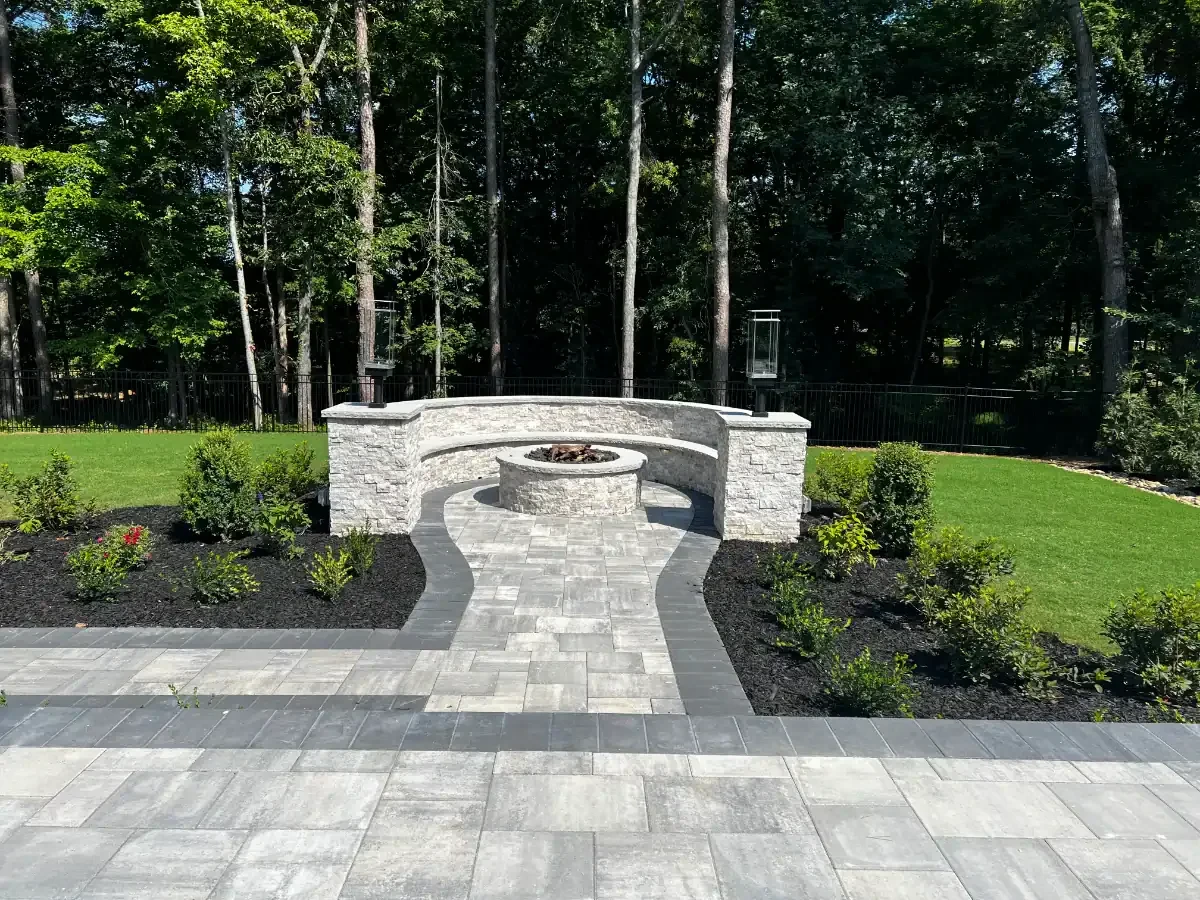
Outdoor fireplaces work best when they anchor a defined space. Think of them as a wall or focal point that organizes the layout. You can build seating around them, integrate them into retaining walls, or use them to separate different zones within a larger hardscape design—maybe dividing your outdoor kitchen from your lounging area.
Masonry fireplaces built from stone or brick are the traditional choice. They’re permanent, durable, and add serious visual weight to a space. The downside is cost and construction time. A custom masonry fireplace is a significant investment, but it also becomes a long-term feature that adds value to your property.
Prefabricated fireplace kits offer a middle ground. These are engineered systems that come with all the components you need, and they can be faced with stone, stucco, or other materials to match your aesthetic. They’re faster to install and less expensive than full custom builds, but they still deliver the presence and function of a real fireplace.
One advantage outdoor fireplaces have over indoor ones: no venting required. Since they’re open to the air, you don’t need chimneys or flue systems, which simplifies installation and gives you more flexibility in design and placement.
Pair your fireplace with heat-reflective pavers, and you’ve got a setup that works in every season. Cool surfaces during the day, radiant warmth at night. Add landscape lighting around the perimeter, and you’ve created a zone that transitions seamlessly from afternoon gatherings to evening relaxation.
Consider adding built-in seating, storage for firewood or propane, and quality outdoor lighting to complete the zone. The fireplace is the anchor, but the surrounding details make it functional.
And don’t overlook safety features. Spark screens for wood-burning fireplaces, proper clearances for gas lines, and fire-resistant materials in the immediate area all matter. A well-designed outdoor fireplace should feel inviting, not hazardous.
Creating an Outdoor Space That Works in Every Season
Your outdoor space should earn its square footage. That means designing for both comfort and usability, not just curb appeal.
Heat-reflective pavers keep your patio cool enough to walk on during Mecklenburg County, NC summers. A custom outdoor fireplace or fire pit extends your season into fall and winter. Add thoughtful landscape lighting, strategic pergolas, and quality hardscape design, and you’ve created a space you’ll actually use year-round—not just when conditions are perfect.
The best outdoor projects start with a plan that accounts for how you live, not just how things look in photos. If you’re ready to build something that works as hard as it looks good, we can help you design and install a hardscape that fits your property, your budget, and your lifestyle.