
Summary:
Most people think sod installation is the easy part of getting a new lawn. Roll it out, water it, watch it grow. The reality is more involved than that — and the gap between a lawn that looks great for six months and one that looks great for six years almost always comes down to what happened before the first roll was ever laid.
If you’re a homeowner in Mecklenburg County, NC weighing your options, this is the breakdown you actually need — not the glossy version. We’ll walk through the real process, the questions worth asking any installer, and what to watch for once the crew is gone.
Lawn Installation Starts Long Before the Sod Arrives
Here’s something most sod pages won’t tell you: the installation itself is the last step. By the time the rolls hit your yard, the outcome is largely already determined. What happens in the days before — soil testing, tilling, grading, amendment — is where a professional earns their fee.
In Mecklenburg County, NC specifically, this prep work is more critical than it is in most other parts of the country. The Piedmont region sits on heavy clay soil. It compacts easily, drains poorly, and doesn’t give new roots much room to breathe.
A lawn installed over unprepared clay can look fine for a few weeks and then quietly fail as the roots hit a wall they can’t push through. That’s why we don’t cut corners on soil preparation — it’s the foundation for everything that comes after.

Why Soil Preparation Makes or Breaks Sod in the Piedmont
Before any sod goes down, the existing vegetation has to go — all of it. Laying sod over existing grass or weeds is one of the most common and costly mistakes homeowners make when going the DIY route. It seems like a shortcut, but it kills both the old growth and the new sod by trapping air and blocking root contact with the soil beneath.
Once the surface is cleared, the real work begins. The soil needs to be tilled to a depth of four to six inches, and two to three inches of compost should be worked in to improve structure and drainage. For Mecklenburg County’s clay-heavy ground, that amendment step isn’t optional — it’s what makes the difference between sod that roots and sod that sits on top and slowly browns out.
After tilling, the yard gets graded. This means leveling the surface, sloping it slightly away from the house for drainage, and bringing the soil level down about two inches below any concrete edges — driveways, walkways, sidewalks — to account for the thickness of the sod itself. It’s tedious work, but skipping it shows up fast: uneven surfaces, pooling water after rain, and edges that lift or curl.
We also test the soil pH before anything else happens. Most grass types in this region do best in soil with a pH between 6.0 and 6.5. If the soil is too acidic or too alkaline, even the best sod won’t establish well, regardless of how carefully it’s installed. This is the kind of step that separates a thorough crew from one that’s just trying to get in and out.
Choosing the Right Grass Type for Mecklenburg County's Climate
Charlotte and the surrounding Mecklenburg County, NC area sit in what’s called the transition zone — a climate band where both warm-season and cool-season grasses can survive, but where each one comes with trade-offs. Getting the grass selection wrong is a quiet way to set a lawn up for failure before it’s even installed.
Tall Fescue is the most popular choice in the Charlotte area, and for good reason. It stays green most of the year, tolerates shade reasonably well, and handles clay soil better than most alternatives. It’s a cool-season grass, which means it does its best growing in fall and spring. If you’re installing Fescue sod, the window that works best in this area is September through October — when the soil is still warm from summer but the air has cooled enough to reduce stress on the new grass.
Bermuda grass is the right call for full-sun yards with heavy foot traffic. It’s aggressive, drought-tolerant once established, and handles Charlotte’s hot summers without much trouble. The trade-off is that it goes dormant and turns tan in winter, which some homeowners love and others can’t stand. If Bermuda is the right fit, late spring through early summer — May through July — is the ideal installation window.
Zoysia splits the difference. It handles mixed sun and shade, requires less water than Fescue once it’s established, and stays dense enough to crowd out most weeds. It’s slower to establish than Bermuda but more forgiving in yards that don’t get full sun all day. Like Bermuda, it’s a warm-season grass, so spring installation is the move.
The honest answer is that the right grass depends on your specific yard — how much sun it gets, how much foot traffic it sees, whether you have kids or dogs, and how much maintenance you’re willing to do. We look at your actual conditions before recommending anything.
Want live answers?
Connect with a Union Landscaping and Hardscape expert for fast, friendly support.
What Happens on Installation Day — and What You Need to Do After
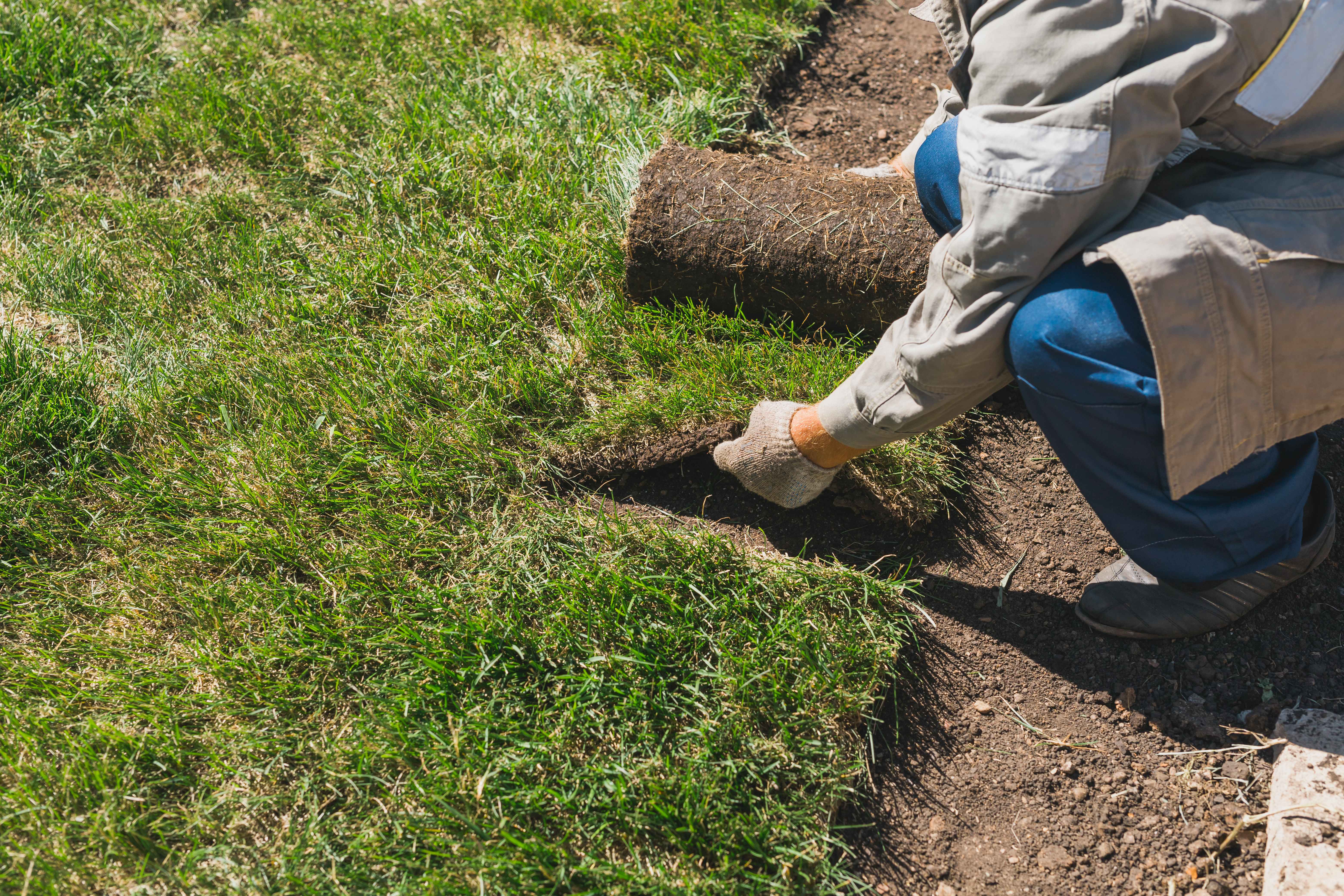
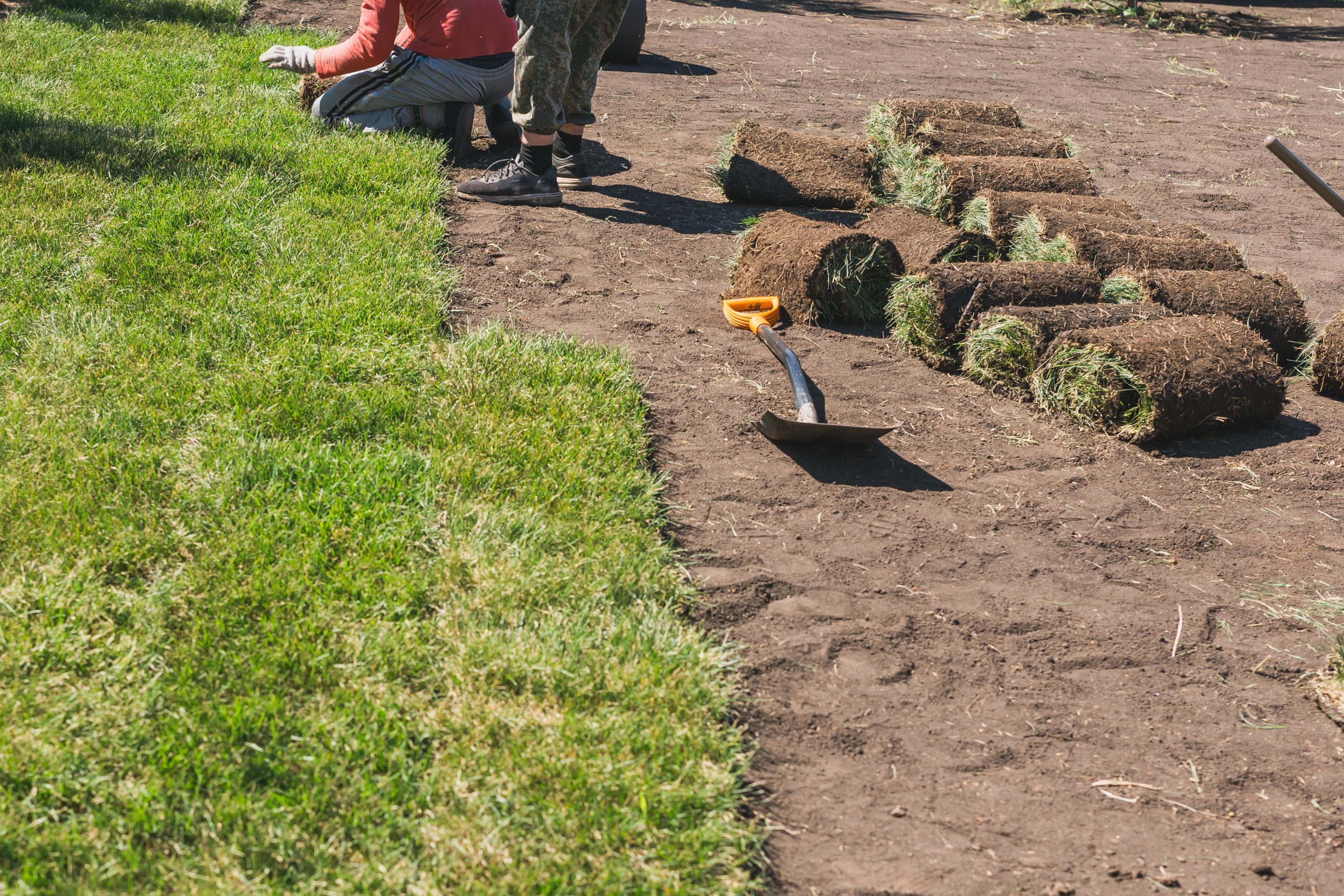
Once the soil is prepped, graded, and tested, the installation itself moves quickly. Sod is laid in a staggered, brick-like pattern — each row offset from the last — with edges pushed tightly together and no gaps. Air pockets are the enemy here. Any space between the sod and the soil beneath it prevents root contact and leads to dry, dead patches.
After the sod is down, a water-filled roller passes over the entire surface to press the roots into firm contact with the soil below. Then it gets watered immediately. And that’s where your job starts.
How to Water New Sod — and When to Mow It for the First Time
The first two weeks after installation are the most critical period for new sod. The goal is to keep the sod and the top inch of soil consistently moist — not soaking wet, but never dry. In practice, that usually means watering daily, applying about an inch of water every one to three days depending on the weather.
In a Mecklenburg County summer, when temperatures push into the 90s and humidity is high, you may need to water more frequently than you think. Overwatering is a real risk too — roots that sit in waterlogged soil can’t get oxygen, and they’ll die just as surely as roots that dry out. The goal is consistent moisture, not standing water.
Do not mow for at least three weeks after installation. It feels counterintuitive when the grass starts growing and looking shaggy, but the roots aren’t anchored yet. Try to pull up a corner of the sod — if it lifts easily, it’s not ready. If it resists and holds, the roots are establishing. When you do mow for the first time, set the blade high and never cut more than one-third of the grass blade at a time.
Hold off on fertilizer too — at least for the first six weeks. Standard lawn fertilizers have high nitrogen levels that can burn the shallow roots of newly installed sod. Starter fertilizer, applied correctly at the right time, is a different story, but that’s a conversation worth having with your installer before they leave.
What Does Sod Failure Actually Look Like — and Is It Fixable?
This is the question most homeowners are actually asking when they research sod installation, even if they don’t phrase it that way. They’ve heard stories — maybe a neighbor’s new lawn went brown within a month. They want to know: what are the warning signs, and what do they mean?
Some browning and stress after installation is completely normal. Sod goes through a period of shock when it’s transplanted to a new environment — it’s been cut from its growing field, rolled up, transported, and laid in unfamiliar soil. Edges may look dry. Color may be uneven. That’s not failure. That’s adjustment.
True failure looks different. It’s sod that doesn’t respond to watering. It’s patches that don’t knit together after two or three weeks. It’s grass that lifts off the soil easily when you tug it, even after a month. If you’re seeing those signs, the most likely culprits are inadequate soil preparation, improper watering in the first two weeks, or sod that was installed during the wrong season for that grass type.
Full establishment — the point where your lawn looks and behaves like a mature lawn — takes six to twelve weeks depending on the time of year and the grass variety. Spring and fall installations in Mecklenburg County, NC tend to establish faster because the temperatures are more forgiving. Summer installations of cool-season grasses like Fescue carry a higher risk of stress and failure, which is exactly why timing matters.
The most important thing we do isn’t just the installation itself — it’s giving you a clear picture of what to expect afterward, what normal looks like versus what’s actually a problem, and what to do if something seems off. We’re personally accountable for the outcome, and that conversation happens before we leave the job site.
Ready to Get a Lawn That Actually Lasts in Mecklenburg County, NC?
Sod installation done right isn’t complicated, but it is detailed. The prep work matters more than the installation itself. The grass variety has to match your actual yard conditions. The post-installation care has to be consistent. And the installer you hire has to be willing to be honest with you about all of it — before, during, and after the job.
Mecklenburg County’s clay soil and transition-zone climate make this a market where corners cut on prep show up fast. The good news is that when it’s done correctly, a professionally installed lawn can transform a bare lot, a construction-damaged yard, or a patchy mess into something you actually want to spend time in.
If you’re ready to talk through what your yard needs — the right grass, the right timing, and what the process looks like from first visit to established lawn — reach out to Union Landscaping and Hardscape S Corp. We’ll give you a straight answer and a detailed estimate with no surprises.