Summary:
You moved into a new build, or maybe your lawn finally gave up after one too many dry summers. Either way, you’re staring at bare red clay and wondering what to do next. The internet gives you a hundred answers, none of them specific to Mecklenburg County — and that’s exactly the problem. What works in Ohio or Arizona doesn’t necessarily work here. The soil is different. The climate sits in an awkward middle zone. And if you miss the right window, you’re waiting another full year. This guide is written specifically for this market, so you can make a decision that actually holds up.
Why New Lawn Installation in Mecklenburg County Is Its Own Challenge
Most of Mecklenburg County sits on heavy Piedmont red clay. It compacts easily, drains poorly, and tends to run acidic — none of which are ideal conditions for establishing new grass. Before a single piece of sod gets laid or a single seed gets spread, that soil needs to be addressed. Skipping this step is the single most common reason new lawns fail here, whether the homeowner did it themselves or hired someone who cut corners.
There’s also the climate to consider. The Mecklenburg County area sits in what turf specialists call a transition zone — hot enough in summer to stress cool-season grasses, but with winters cold enough to knock warm-season varieties into dormancy. Choosing the wrong grass for your specific yard, or installing it at the wrong time of year, can set you back months. Getting this right from the start matters more here than in most markets.
What Soil Prep Actually Looks Like Before Sod or Seed Goes Down
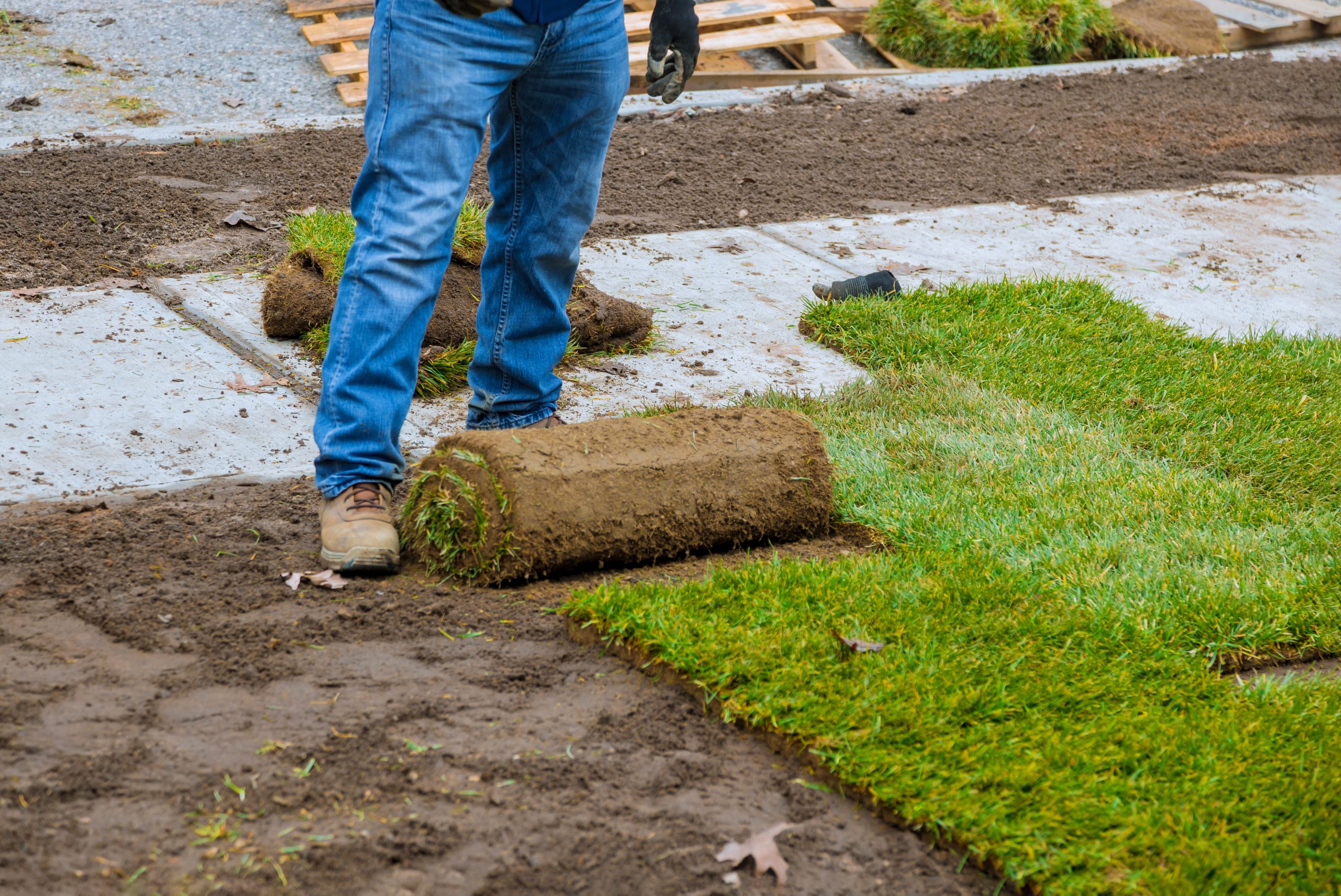
Proper new lawn installation starts well before anything green touches the ground. The first step is a soil test. In Mecklenburg County, clay soils typically run acidic, and most grass varieties need a more neutral pH range to establish and thrive. If the pH is off, the grass struggles regardless of how good the sod was or how carefully you watered it. A lime application corrects acidity; the amount depends on what the test shows.
After addressing pH, the soil itself needs amendment. Clay doesn’t have the structure that roots need — it’s too dense, holds too much water in the wrong places, and doesn’t allow air to move through. Adding compost helps break up the clay and creates the kind of environment where roots can actually spread. This isn’t cosmetic. It’s what determines whether your lawn is still alive in August.
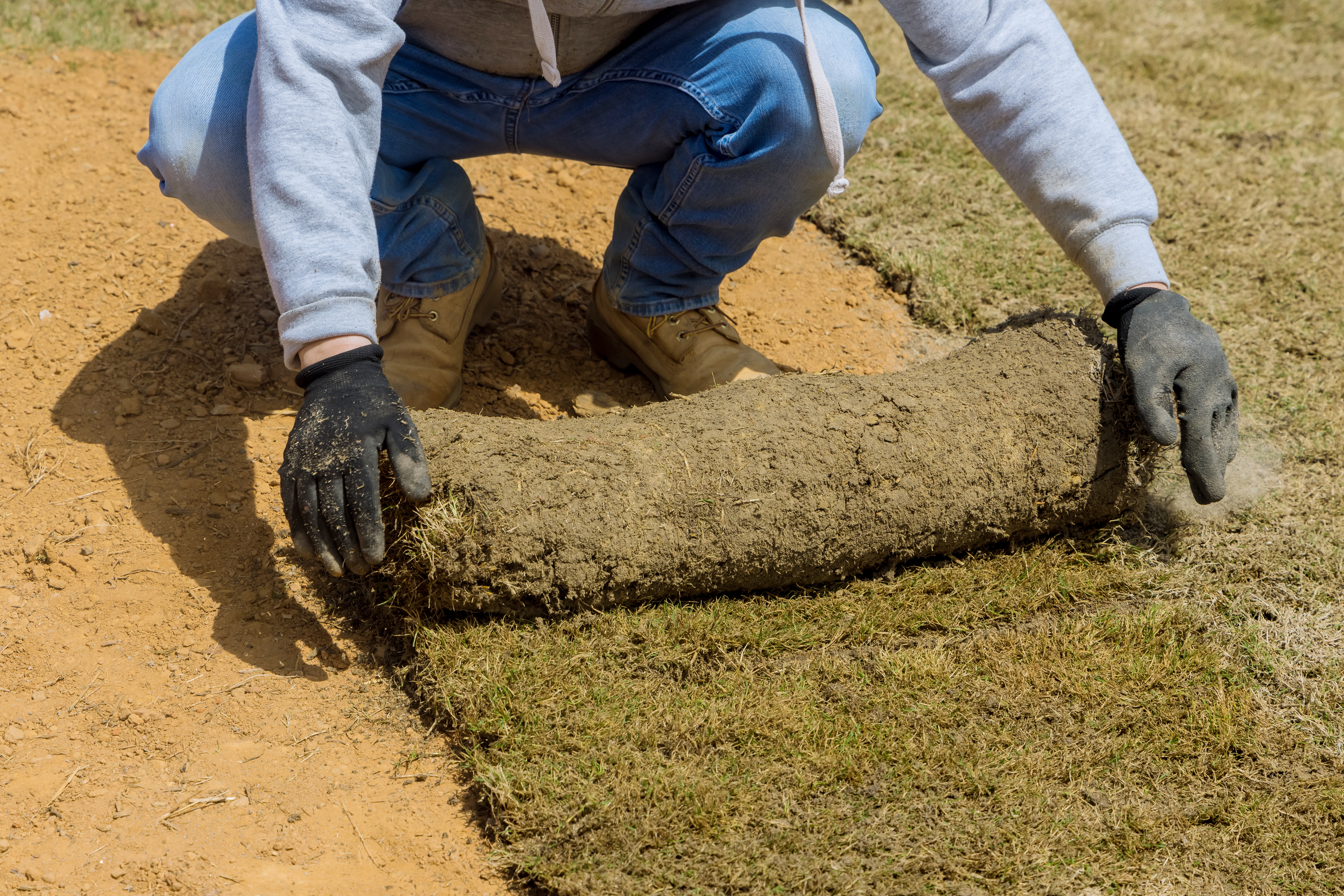
From there, the existing vegetation needs to come out — not just mowed down, but fully stripped. Laying sod over old grass or weeds is a shortcut that produces short-term green and long-term problems. The site also needs to be graded properly so water drains away from the house and doesn’t pool anywhere on the lawn. Standing water after a rain is a warning sign that the grade wasn’t done right, and it’s much harder to fix after the lawn is in.
Once the soil is prepped, amended, and graded, you’re finally ready to talk about what goes on top of it. That’s when the sod vs. seeding decision actually matters — and when the timing question becomes critical.
Sod vs. Seeding: Which One Makes Sense for Your Mecklenburg County Yard
The honest answer is that neither sod nor seeding is universally better. The right choice depends on your yard, your timeline, and — more than most people expect — what month it is when you’re making this decision.
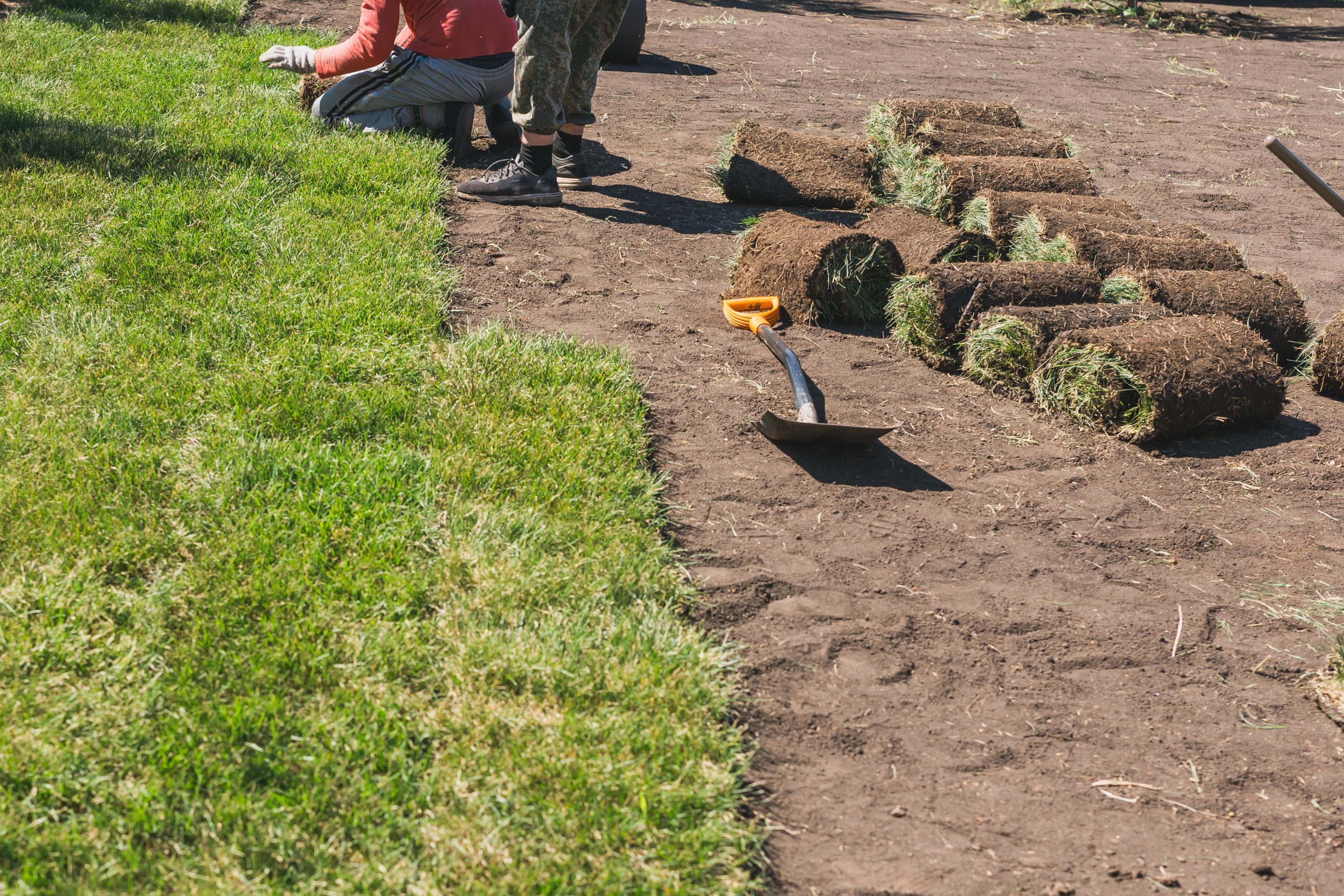
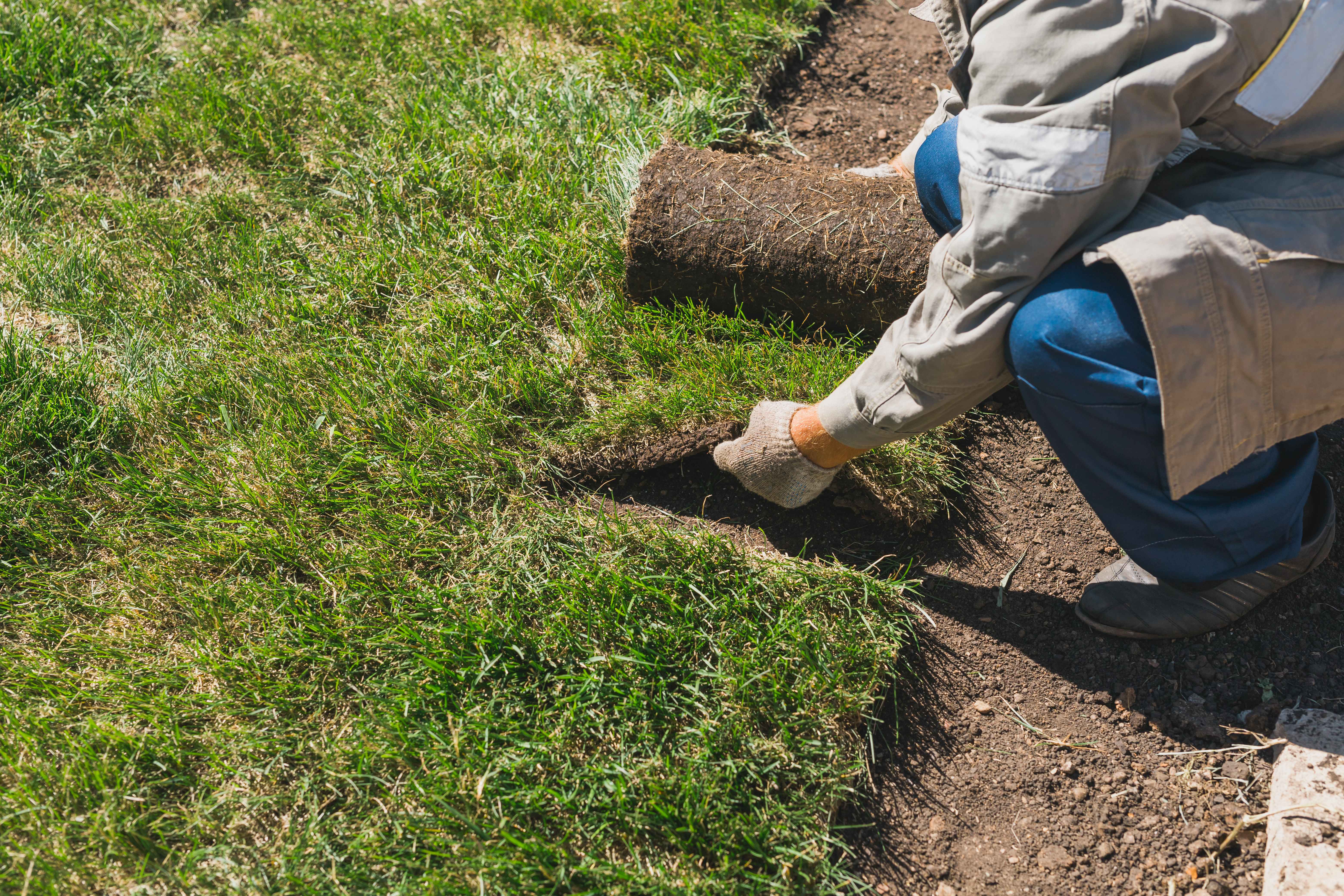
Sod gives you an established lawn almost immediately. You’re not waiting for germination or worrying about seed washing away in a rainstorm. Newly installed sod can handle light foot traffic within two to three weeks, which matters if you have kids, dogs, or an HOA with a timeline. It’s also better for slopes and areas prone to erosion, where seed would simply wash downhill before it had a chance to root. The tradeoff is cost. Sod materials in North Carolina run roughly $0.45 to $0.56 per square foot, and with professional installation, you’re typically looking at $1.40 to $1.65 per square foot all in. For a mid-sized yard, that adds up quickly.
Seeding is significantly less expensive on the material side — often $0.09 to $0.19 per square foot for seed alone, with a typical full-service project landing somewhere between $700 and $1,800. But seeding demands patience. A newly seeded lawn takes ten to twelve weeks before it can handle even light foot traffic, and that’s assuming everything went right: the timing was correct, the soil was properly prepped, and the new seed got consistent moisture. One dry week during germination can set the whole thing back.
Here’s where Mecklenburg County’s climate makes the decision more specific. If you want Tall Fescue — the most popular grass in this region because of its shade tolerance, deep roots, and ability to handle clay soil — seeding needs to happen between mid-September and early October. That’s the window. Miss it, and you’re either waiting until next fall or considering sod instead. Warm-season grasses like Bermuda and Zoysia go in as sod or seed from late April through June, when soil temperatures are consistently above 65 degrees. A homeowner who closes on a new build in January or July is facing a very specific set of options that a generic sod vs. seed article will never address.
In 2023, Mecklenburg, Union, and Cabarrus counties were reclassified from USDA Zone 7b to Zone 8a, reflecting rising average winter temperatures. This expands the viable grass palette slightly — some warmer-climate varieties are now more viable here than they were a decade ago. It’s a detail most contractors won’t bring up, but it matters for long-term grass selection.
Want live answers?
Connect with a Union Landscaping and Hardscape expert for fast, friendly support.
Lawn Design: How the Lawn Fits Into the Bigger Picture
A new lawn doesn’t exist in isolation. The grade of the lot, the placement of hardscape elements like patios and walkways, drainage patterns, and even the tree canopy all affect how your lawn performs over time. Getting the lawn right means thinking about all of these things together, not just picking a grass type and rolling it out.
This is especially true for new-build homeowners in Mecklenburg County, where lots are often graded flat by the builder with minimal attention to drainage or long-term landscaping. A lawn installed without addressing those underlying conditions can look great for a season and then start failing as compaction, pooling, and runoff take their toll.
How Drainage and Grading Affect Whether Your New Lawn Survives
Southeast Mecklenburg County grew by more than 120% between 2010 and 2020, almost entirely from new residential construction on land that was previously vacant or agricultural. That’s a lot of homeowners who moved into yards that were essentially raw ground — builder-graded, minimally landscaped, and often with drainage that wasn’t designed with a lawn in mind.
Mecklenburg County’s clay soil doesn’t absorb water quickly. When it rains hard, water needs somewhere to go. If the lot isn’t graded to move water away from the house and toward appropriate drainage points, it pools. Pooling kills grass. It also creates soft spots, encourages fungal issues, and can push water toward the foundation over time. These are problems that show up after the lawn is in, at which point fixing them means tearing up what you just installed.
Addressing grade and drainage before installation is the right sequence. Sometimes that means regrading a section of the yard. Sometimes it means installing a French drain or a dry creek bed to redirect runoff. In some cases, a retaining wall is the right answer for a sloped section of the property. None of this is glamorous, but it’s what separates a lawn that looks good for two seasons from one that holds up for twenty years.
For homeowners who want to add hardscape elements — a patio, a walkway, a fire pit area — the sequencing matters too. Installing a patio after the lawn is in risks damaging the root system and compacting the soil you just amended. Getting the hardscape footprint established first, then building the lawn around it, produces a cleaner result and avoids rework.
Lawn Seeding Service: What to Expect From a Professional Installation
A professional lawn seeding service does more than scatter seed and leave. The process starts with everything described above — soil testing, pH adjustment, compost amendment, and grading — because none of that changes based on whether you’re seeding or sodding. The difference is what happens after the prep work is done.
For Tall Fescue seeding in Mecklenburg County, the timing window is narrow: mid-September to early October. Seeding in this window gives the grass time to germinate and establish before winter, without competing against the heat stress of summer. Seeding in spring is possible but harder — the grass is racing against rising temperatures, and if it doesn’t establish roots before the summer heat arrives, you lose it.
A quality seeding job includes selecting the right seed variety for the specific conditions of your yard. Tall Fescue handles shade and clay soil better than most cool-season grasses, which is why it dominates the Mecklenburg County market. But if your yard is full sun with high foot traffic, Bermuda is a stronger performer even though it goes dormant in winter. Zoysia splits the difference — it handles mixed sun and shade, requires less water than Fescue once established, and holds up well under moderate traffic. It’s typically installed as sod or plugs rather than seed.
After seeding, the lawn needs consistent moisture to germinate — daily watering for the first two weeks is standard. It also needs to be left alone. No mowing until the grass reaches about three to four inches, and no heavy foot traffic for the first ten to twelve weeks. These aren’t suggestions; they’re the difference between a lawn that establishes and one that thins out before it ever really starts.
What you’re paying for when you hire a professional isn’t just the seed. It’s the soil prep, the timing knowledge, the right variety selection, and the accountability that comes with a contractor who’s done this specifically in Mecklenburg County’s clay soil — not just somewhere in the Southeast.
Ready to Start Your New Lawn? Here's What to Do Next
The sod vs. seeding decision isn’t complicated once you factor in your yard’s specific conditions, the time of year, and what you actually want from your lawn. Sod gives you speed and reliability. Seeding gives you a lower upfront cost with a longer establishment window. Both require proper soil prep — especially in Mecklenburg County, where the clay soil will undermine either approach if it’s not addressed first.
What matters most is getting the sequence right: test the soil, fix the grade, amend the clay, choose the right grass for your yard’s sun and traffic patterns, and install at the right time of year. Done in that order, a new lawn in Mecklenburg County can establish and hold up through the heat, the clay, and the occasional dry stretch that comes with a Carolina summer.
If you’re at the beginning of this process and want a straight answer about what your specific yard needs, we at Union Landscaping and Hardscape S Corp offer free consultations and provide detailed written estimates before any work begins. No guesswork, no surprises.