Summary:
You’ve got a number in your head. You’ve done some searching, seen some ranges, maybe gotten a quote or two that don’t quite match. That’s normal — sod installation pricing in Mecklenburg County is genuinely variable, and not all of that variation is explained by yard size.
Some of it comes down to soil prep. Some of it comes down to grass variety. And some of it comes down to whether the contractor actually knows what they’re dealing with when they show up to your property.
We’ve put together this guide to break down what new grass installation actually costs in Mecklenburg County, what drives the price up or down, and why the cheapest bid on your list is often the most expensive decision you can make.
Sod Installation Per Square Foot: What the Numbers Mean in Mecklenburg County
In Mecklenburg County, professional sod installation typically runs $1.55 to $3.10 per square foot installed — all-in, meaning sod material, delivery, labor, and basic site prep. The typical rate lands around $2.18 per square foot, and the average homeowner in our area ends up paying somewhere around $2,904 for the full project.
Those numbers can shift significantly depending on your yard. A 500-square-foot patch might run $775 to $1,550. A standard 2,000-square-foot lawn lands in the $3,100 to $6,200 range. If you’re working with a larger property or a site that needs more preparation, costs climb accordingly.
What matters is understanding what’s inside that number — because two quotes at different price points aren’t always quoting the same job.
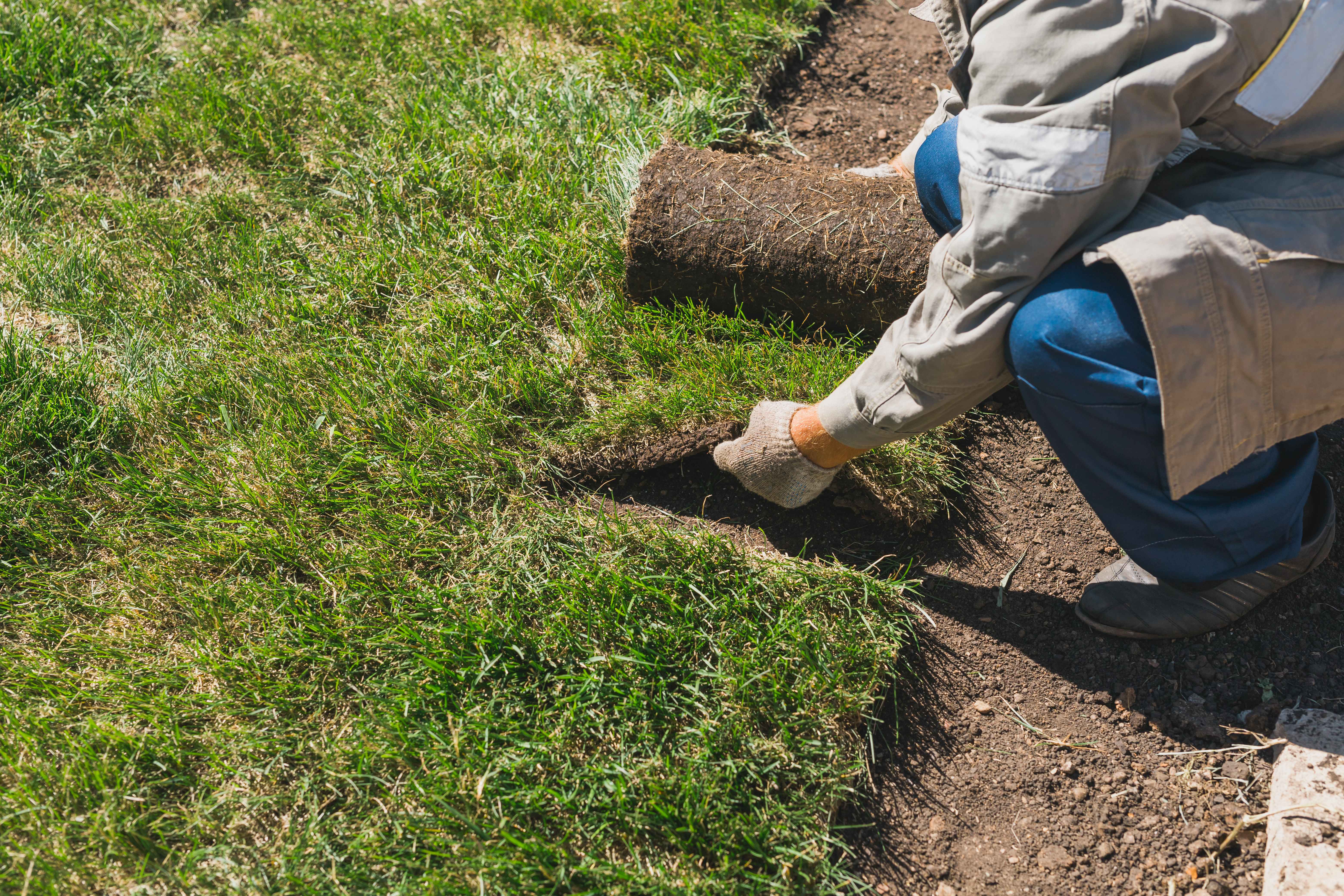
What Does the Cost to Have Sod Installed Actually Include?
The sod itself is only part of the cost. Material alone — just the grass — runs roughly $0.45 to $0.56 per square foot in North Carolina, based on 2023 Sod Producers Report data. That’s about $130 to $360 per pallet, with one pallet covering around 450 square feet. Delivery adds another $50 to $250 depending on your location and order size.
Labor accounts for the rest, and it’s where quality really separates from cheap. Professional installation labor runs $0.50 to $1.00 per square foot on top of materials — and that’s before any site preparation work. Old grass removal adds $0.50 to $2.00 per square foot. Grading, leveling, or topsoil work adds another $0.40 to $2.00 per square foot on top of that.
Here in Mecklenburg County’s Piedmont region, that prep work is rarely optional. Our red clay soil compacts easily. It resists root penetration when dry and holds water when saturated, which creates drainage problems that kill sod fast. Most sod projects in Mecklenburg County require $500 to $1,500 in grading and soil amendment work just to give the grass a fighting chance. A contractor who skips this step — or prices it out of the bid to look cheaper — is handing you a dead lawn on a payment plan.
Grass variety selection also drives cost variance. The choice of grass type accounts for 30 to 50 percent of total project cost differences in Mecklenburg County. Bermuda, Zoysia, and Tall Fescue each carry different material costs, installation timing requirements, and long-term performance expectations in this climate. That decision matters, and it should be made before anyone orders sod.
Why Grass Selection in Mecklenburg County Is More Complicated Than It Looks
Mecklenburg County sits in what’s called the grass transition zone — a band across the middle of the country where neither warm-season nor cool-season grasses are a perfect fit. Most homeowners don’t know this until after they’ve made the wrong choice.
Warm-season grasses like Bermuda and Zoysia thrive in the heat and handle Mecklenburg County summers well. They’re dense, durable, and drought-tolerant once established. The catch is that they go dormant in winter — meaning your lawn turns brown from roughly November through March. That’s not a defect; it’s just how those grasses work. But if you’re expecting year-round green, it’s a problem.
Cool-season Tall Fescue stays green most of the year and handles Mecklenburg County’s clay soil better than most alternatives, thanks to its deep root system. It’s the most popular cool-season grass in our area for that reason. The trade-off is summer stress — Fescue can thin out or die back during extended heat waves without consistent irrigation.
Timing matters too. Bermuda and Zoysia should go in during late spring through early summer, when soil temperatures are warm and the grass is in its peak growing phase. Fescue installs best in early fall, typically September through October, when cooler temperatures let it establish before winter. Install either grass outside its window and you’re fighting the calendar from day one.
A contractor who doesn’t ask about your yard’s sun exposure, shade patterns, drainage, and how you plan to maintain the lawn isn’t giving you a recommendation — they’re giving you whatever’s available. That’s a meaningful difference.
Want live answers?
Connect with a Union Landscaping and Hardscape expert for fast, friendly support.
Average Cost to Sod a Yard: Why Two Quotes Can Look Nothing Alike
If you’ve already collected a few bids, you may have noticed they don’t agree. One contractor comes in at $1,800. Another quotes $4,200 for what sounds like the same job. That gap is real, and it’s not random.
Some of it reflects legitimate differences in scope — one contractor is quoting materials only while another includes full site prep. Some of it reflects experience and overhead. And some of it reflects corners being cut in ways that aren’t obvious until the lawn fails three months later.
Understanding what’s actually driving that variance is the most useful thing you can do before signing anything.
What a Low Sod Installation Bid Is Usually Leaving Out
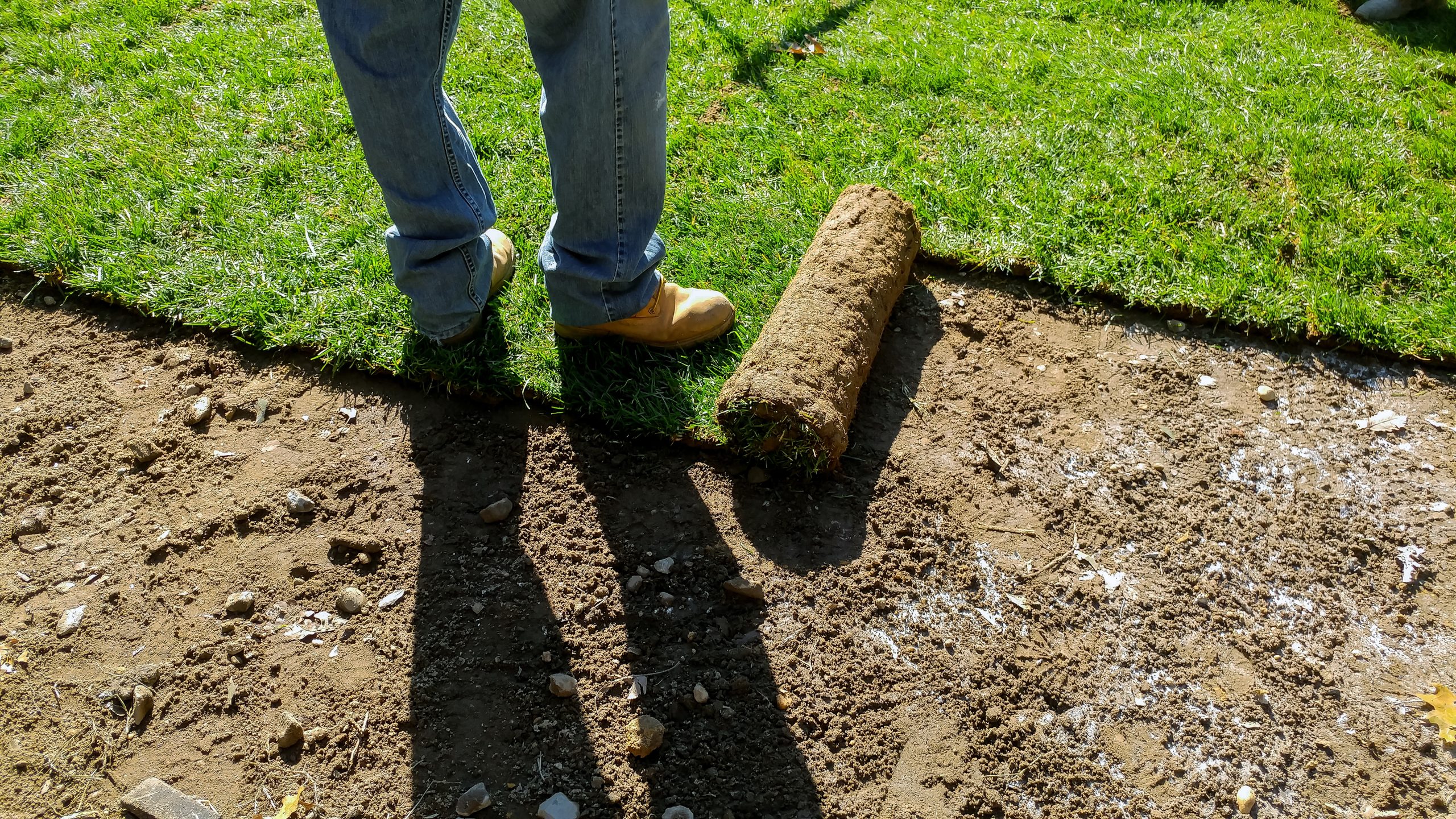
The cheapest bid on your list is almost always cheap for a reason. In sod installation, the most common places to cut cost are also the most consequential: soil preparation, grass variety quality, and post-installation guidance.
Soil prep is the step that determines whether your lawn survives its first summer. In Mecklenburg County, where clay soil dominates the landscape, skipping or rushing this step is the single most reliable way to produce a failed installation. Clay that hasn’t been properly graded and amended will compact under foot traffic, resist root penetration, and create drainage pooling that rots sod from below. The grass looks fine on installation day. By July, it’s patchy and struggling. By fall, you’re calling someone to re-install it — and paying again.
Grass variety quality is the second common shortcut. Lower-cost sod often means older stock, thinner coverage, or a variety that doesn’t match your yard’s actual conditions. Good sod should be one to two inches tall, dense, even in color, and installed within 24 hours of delivery. Sod that sat on a pallet for three days in July heat is already stressed before it hits your yard.
Post-installation care is where cheap contractors go quiet. New sod needs consistent watering for at least two weeks to establish root contact with the soil — and the specific schedule matters. A contractor who hands you a receipt and drives away without a watering plan is leaving your investment unprotected.
Red flags worth taking seriously: a contractor who asks for full payment upfront, can’t provide proof of licensing and insurance, gives you a single-line estimate with no breakdown, or can’t tell you what grass variety they’re planning to install. North Carolina requires a landscape contractor license for projects over $30,000 — and it’s worth asking for proof before work begins.
Is New Sod Installation Worth the Cost? What It Does for Your Property
If you’re on the fence about whether professional sod installation is worth the investment, the numbers are fairly clear. The NAR 2023 Remodeling Impact Report found that standard lawn care returns 217 percent of its cost at resale — one of the strongest returns of any home improvement category. Landscaping broadly can increase home value by 10 to 30 percent depending on quality and scope. University research shows that consumers valued a landscaped home up to 11 percent higher than an equivalent unlandscaped property.
The curb appeal argument is real too. Ninety-seven percent of real estate agents say curb appeal matters to buyers, and 92 percent recommend sellers improve it before listing. A dead or patchy lawn is one of the first things a buyer notices — and one of the easiest reasons to negotiate the price down.
Beyond resale, there’s the practical side. A properly installed lawn in Mecklenburg County — one that’s been matched to the right grass variety, laid over properly prepared soil, and given time to root — doesn’t need to be redone every few years. It handles foot traffic, manages drainage, and stays green through the seasons it’s designed for. That’s what a well-executed installation looks like.
Sod also beats seed on timeline by a significant margin. Seeding takes six to eight weeks just to germinate, and full establishment can take up to two years — during which the lawn is uneven, vulnerable to weeds, and not ready for regular use. Sod gives you a functional lawn in two to three weeks. In Mecklenburg County, where the median home age is around 25 years, a lot of lawns are overdue for this kind of reset.
Getting New Grass Installation Right the First Time in Mecklenburg County
The cost of new grass installation in Mecklenburg County isn’t just a number — it’s a reflection of what’s actually being done to your yard. The right project includes soil prep, the right grass variety for your specific conditions, proper installation technique, and a clear plan for the first few weeks after the sod goes down.
The cheapest bid skips steps. Those skipped steps are exactly what determine whether your lawn is still healthy in August.
If you want a straight answer about what your specific yard would cost — and what it would actually take to do it right — we offer free consultations with a callback within 24 to 48 hours. No runaround, no vague estimates. Just an honest look at your property and a clear plan for what comes next.